🥾 Trail guide · Northern Ireland – Causeway Coast, County Antrim
Giant's Causeway Walk: A Complete Guide to the Stones and the Causeway Coast Way Cliff Path

- Distance
- 7.3 km
- Ascent
- 100 m
- Time
- 3–4 hours one way
- Difficulty
- Moderate
- Route
- Point to point
- Best season
- All year (April–September for the longest days)
👶 With kids: Kids love scrambling over the stones, and the cliff path suits children who are used to walking, with close supervision as much of it is unfenced. Use a back carrier for babies, as the Shepherd's Steps and cliff path aren't pushchair-friendly.
✅ Updated and fact-checked on 5 November 2026. Prices, timetables and rules can change, so check the official sources before you go.
This post contains affiliate links. If you book or buy through them, I may earn a small commission at no extra cost to you. More about this
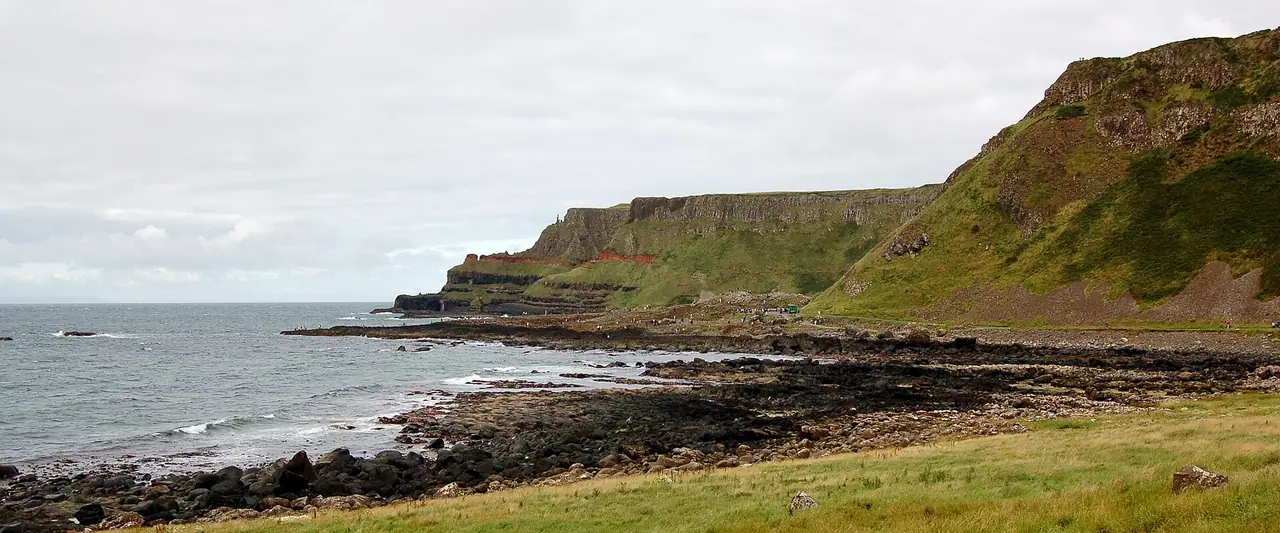
Have you ever seen a coastline that looks like it was built by giants? At the Giant's Causeway, around 40,000 basalt columns step down into the sea on the north coast of County Antrim. Most of them are neat hexagons, like a huge honeycomb made of stone. They formed from volcanic eruptions around 50 to 60 million years ago. However, the local legend is much more fun. The Irish giant Finn McCool (Fionn mac Cumhaill) built the causeway to reach his Scottish rival Benandonner. When Benandonner came over, Finn's clever wife disguised Finn as a baby. The Scottish giant took one look at the size of the "baby" and ran home!
I spent two months in Ireland as an au pair years ago, but I never made it up to the north coast. We haven't walked this one yet, but it is high on our bucket list, so I've researched every detail for you.
Most visitors walk down to the stones, take a few photos and go back. That is lovely, but I think the real magic is up on the cliffs. In this guide you visit the stones first, climb the Shepherd's Steps and then follow the Causeway Coast Way cliff path east to the ruins of Dunseverick Castle. Would you rather fight the crowds or have a wild cliff path almost to yourself?
At a glance
- Distance: about 7.3 km one way from the Giant's Causeway to Dunseverick Castle on the cliff path. Add a bit more for the detour down to the stones
- Elevation gain: at least 100 m. You climb from the shore to Hamilton's Seat, about 100 m above the sea, with small ups and downs along the way
- Allow 3–4 hours one way, including time at the stones. Double the walking time if you walk back
- Difficulty: Moderate. A steep flight of steps, then a grassy cliff-top path with unfenced edges
- Route type: Point to point (or walk back the same way)
- Start: Giant's Causeway Visitor Centre, near Bushmills. Finish: Dunseverick Castle
- Best season: all year, but April–September for the longest days
- Prices: walking to the stones and along the coastal path is free. You only pay for the Visitor Centre experience
- Toilets: at the Giant's Causeway. There are none on the cliff path
- Suitable for children: yes, for kids who are used to walking, with close supervision on the cliffs
- Dogs: keep them on a lead. The path crosses working farmland with livestock
Route description
Visitor Centre to the stones
Start at the Giant's Causeway Visitor Centre. From here, paths lead down towards the shore and the famous columns. The stones and the coastal path are always open, and you don't need to go through the Visitor Centre to see them.
Take your time on the stones. Look out for the named features, like the Giant's Boot, the Organ (tall columns that look like organ pipes), the Honeycomb and the Giant's Gate. It is so much fun to hop from column to column. But be careful, as they are really slippery when wet!
Up the Shepherd's Steps
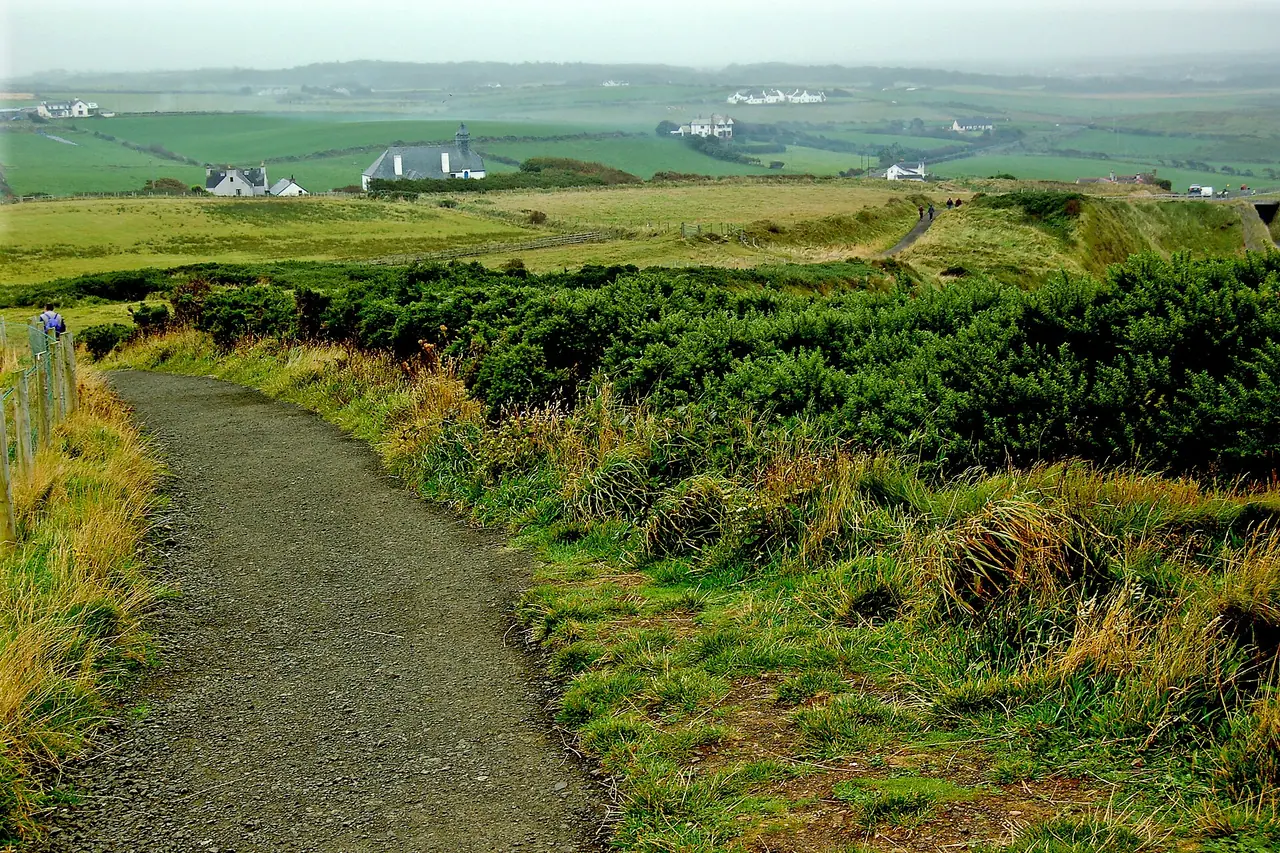
From the shoreline, the Shepherd's Steps take you back up to the top of the cliffs. It is a steep climb, so go at your own pace. At the top you join the cliff-top path, often called the Red Trail. This is also part of the Causeway Coast Way, a long-distance route from Portstewart to Ballycastle.
The cliff path to Hamilton's Seat
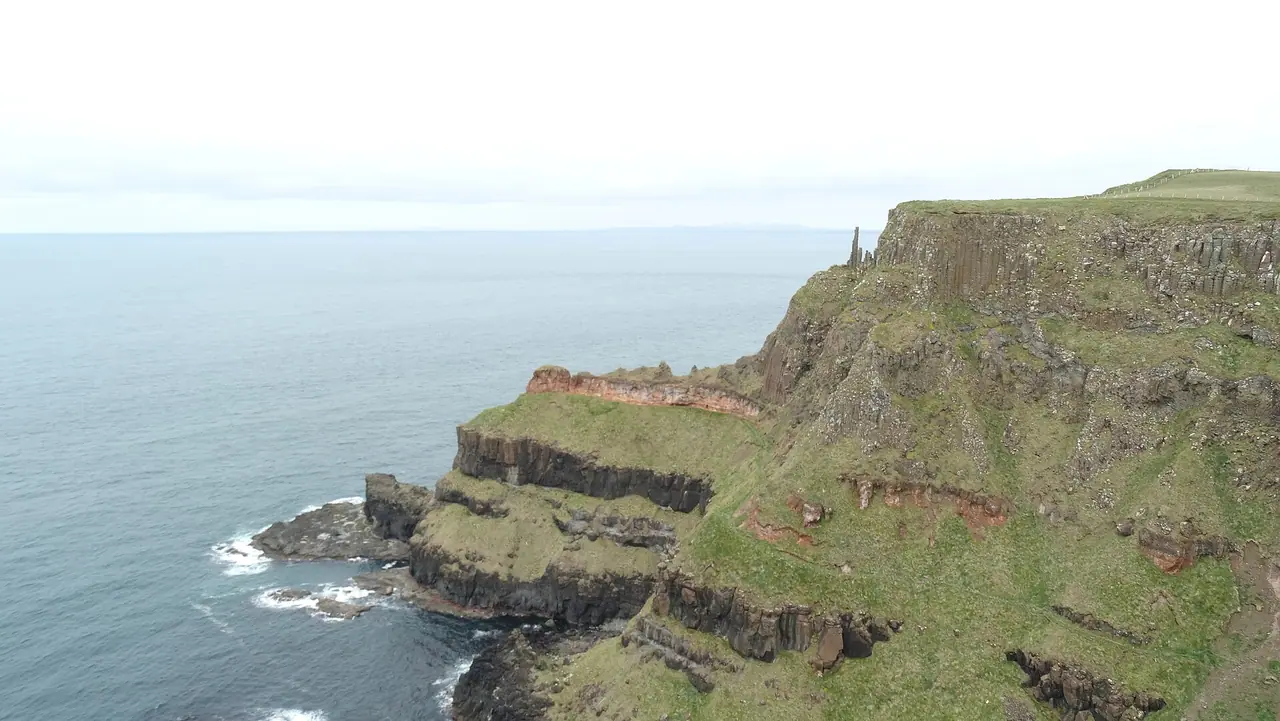
Turn east along the cliff top. The views back over the Causeway and the bays below are stunning. Soon you reach Hamilton's Seat, the highest point of the whole Causeway Coast Way at about 100 m above the ocean. On a clear day you can see along the coast and out to sea. If you only want a short walk, this is a great place to turn back.
Headlands and bays
The path carries on east along the top of the cliffs. You pass one dramatic headland after another, with rocky points and small bays far below. Some sections are close to the edge, and in places the path is narrow and can be muddy. Stay on the path, especially in wind. It is a lot quieter than the stones, so you might have long stretches to yourself.
Dunseverick Castle
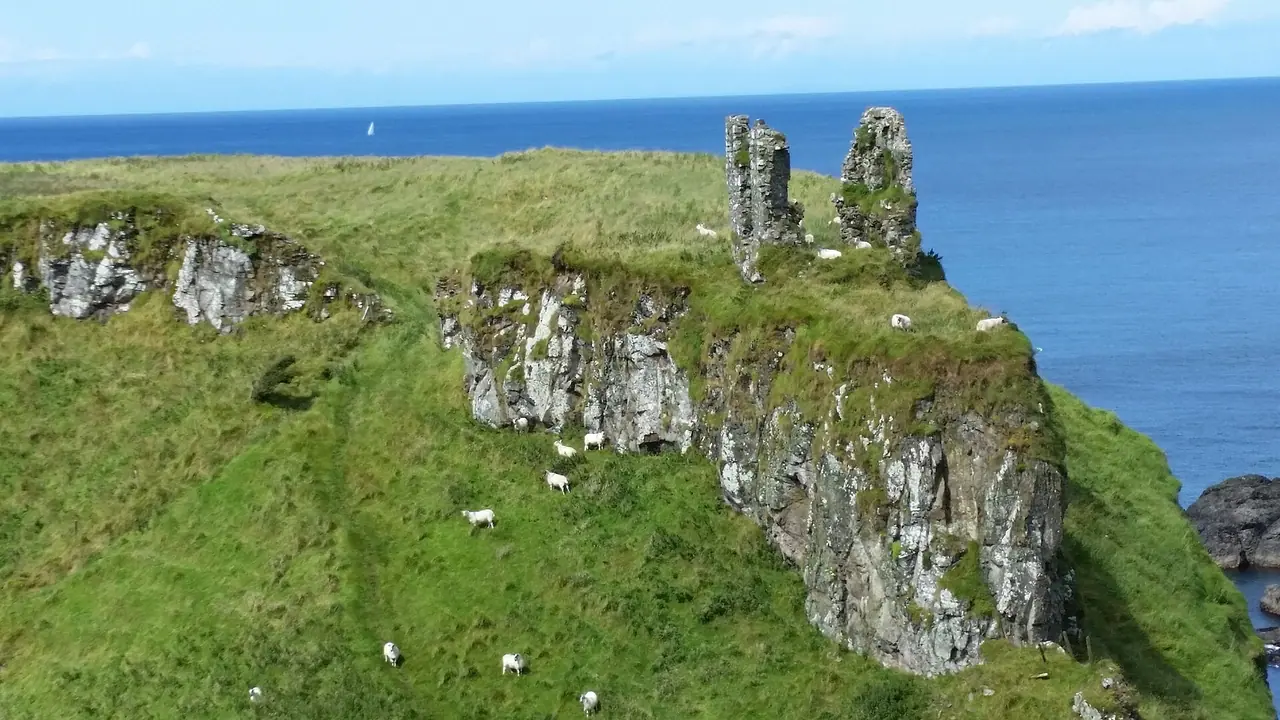
The section ends at Dunseverick Castle, about 7.3 km from the Giant's Causeway. Only a small ruin is left on its rocky headland. However, the site has a long history. According to records, Saint Patrick visited in the 5th century. Later it was the seat of the kings of Dál Riata, and Vikings attacked the fort in 870 AD. The last tower fell into the sea in 1978.
From here you can walk back the same way. Or, if you have more energy, continue on the Causeway Coast Way to Dunseverick Harbour and White Park Bay. Check the tide times first, as the boulder sections around White Park Bay can be impassable at high tide.
How to get there
By car and parking
The Giant's Causeway is on the north coast of County Antrim, near the village of Bushmills. It is over an hour's drive from Belfast.
Parking: the main car park is at the Visitor Centre, run by the National Trust. There are also car parks at other points along the Causeway Coast Way. Parking charges change, so check the National Trust website before you go. Please don't park on the verges of the narrow coast roads.
Public transport
- Train: the Belfast–Derry/Londonderry railway line stops at Coleraine. From there, a branch line runs to Portrush.
- Bus: Translink runs the buses on the north coast. Plan your journey to the Causeway, and back from Dunseverick, with the Translink Journey Planner.
- On foot: you can walk the Causeway Coast Way from Portrush via Dunluce Castle and Portballintrae. The section from Portballintrae to the Giant's Causeway is 4.3 km and fully off-road.
Coming from the Republic of Ireland
Many people visit on a trip to Ireland. Remember that Northern Ireland is part of the UK. Unless you have a British or Irish passport (or another permission to be in the UK), you need a UK Electronic Travel Authorisation (ETA). It costs £20 on the official GOV.UK website.
Permits, fees & opening times
- The stones and coastal path: always open and free to walk.
- Visitor Centre: open all year except Christmas Eve, Christmas Day and Boxing Day. Last admission is 1 hour before closing. Book your Visitor Centre experience tickets in advance on the official Giant's Causeway tickets website.
- World Heritage Site: the Giant's Causeway became a UNESCO World Heritage Site in 1986 and a National Nature Reserve in 1987. Please don't take any stones or pebbles home.
When to go
You can visit all year. Nearly one million people came to the Giant's Causeway in 2019, so it gets really busy, especially in summer and at weekends. To beat the crowds, I suggest arriving early in the morning or late in the afternoon. The light is softer then too, which is great for photos.
The cliff path is at its best on a dry, calm day from spring to early autumn. In winter, storms bring huge waves, and the path can be muddy and very windy. Always check the weather forecast before you set off, and check the tide times if you plan to continue past Dunseverick.
Hiking with kids
Suitable for children: the stones are a giant natural playground, and most kids will love them. The full cliff path is fine for children who are used to walking. However, the edges are unfenced, so keep them close and hold hands in windy weather.
- Short option: visit the stones, climb the Shepherd's Steps and walk to Hamilton's Seat. Then return along the cliff top.
- Carriers: a back carrier is best for babies and toddlers on the steps and the cliff path.
- Pushchairs: not suitable for the Shepherd's Steps or the cliff path. Ask the National Trust which paths are best for prams on the day.
- Keep them engaged: tell them the story of Finn McCool before you go. Then let them hunt for the Giant's Boot and count the sides of the columns. Most have six, but some have four, five, seven or eight.
What to pack
- Walking boots or shoes with good grip, as the stones and the grass get slippery
- A windproof and waterproof jacket. The weather on this coast changes fast
- Water and snacks. There are no shops or cafés on the cliff path
- Tide times if you plan to walk further east
- A camera, of course!
If you are visiting with a baby, an all-terrain pram is handy for the flatter paths around the area. We use our Out n About Nipper, and it goes through mud, grass and sand without any issue.
Safety tips
- Be careful at the cliff edge! Much of the path is unfenced, and the drops are huge.
- Watch the waves when you are on the stones. Stay well back from the water in rough weather.
- Take care on wet rock. The columns are smooth and slippery.
- Expect livestock and uneven, wet ground on the farmland sections.
- Check tide times if you continue east past Dunseverick towards White Park Bay.
- In an emergency, call 999. Ask for the Coastguard if someone is in trouble on the cliffs or in the sea.
Leave no trace & sustainable tips
- Leave the stones where they are. This is a protected World Heritage Site and nature reserve.
- Stay on the path to protect the cliff-top plants and avoid erosion.
- Close gates behind you and keep dogs on a lead near livestock.
- Take all your litter home.
- Come by train and bus if you can, or walk in along the coast from Portballintrae.
- Support local cafés, shops and B&Bs in Bushmills and the coastal villages.
Where to stay & eat nearby
- Bushmills is the closest village to the Causeway, with places to stay, pubs and cafés.
- Portrush is a lively seaside town with lots of accommodation and restaurants, and it has a railway station.
- Portballintrae is a small, quiet harbour village, linked to the Causeway by an off-road path.
- Ballycastle, at the eastern end of the Causeway Coast Way, is a good base for Carrick-a-Rede.
More to explore nearby
- Dunluce Castle: a dramatic ruined castle on the cliffs between Portrush and Portballintrae.
- Carrick-a-Rede rope bridge: a famous rope bridge to a tiny island, further east along the coast.
- Ballintoy Harbour: a cute little harbour on the Causeway Coast Way.
- White Park Bay: a wild, sandy beach east of Dunseverick.
- Portrush: long sandy beaches, including East Strand.
FAQ
Is it free to visit the Giant's Causeway?
Yes, the stones and the coastal path are free and always open. You only pay if you visit the Visitor Centre experience.
How long is the walk from the Giant's Causeway to Dunseverick Castle?
It is about 7.3 km one way along the cliff-top path. I suggest allowing 3–4 hours including time on the stones, and more if you walk back.
Is the Causeway Coast Way cliff path dangerous?
It is not technical, but much of it is unfenced and close to big drops. Stay on the path, avoid it in strong wind and keep children close.
Do I need an ETA to visit the Giant's Causeway?
Northern Ireland is part of the UK. So unless you have a British or Irish passport or other UK permission, you need a UK ETA. It costs £20.
Have you walked the cliff path from the Giant's Causeway? Let me know in the comments!
Photo credits (4)
All photos on this page are by other photographers and are used under free licences. Thank you for sharing them.
- Cover photo: Giant's Causeway, 2006 (01).jpg by Bahnfrend, CC BY-SA 4.0, via Wikimedia Commons. Resized and cropped for this page.
- Photo 2: Antrim Coast - Giant's Causeway - Footpath along Cliff Edge northeast of Visitor Centre - geograph.org.uk - 3720232.jpg by Joseph Mischyshyn, CC BY-SA 2.0, via Wikimedia Commons. Resized for this page.
- Photo 3: On Causeway Coast Path - View NE to Lacada Point - geograph.org.uk - 5221841.jpg by Colin Park, CC BY-SA 2.0, via Wikimedia Commons. Resized for this page.
- Photo 4: Dunseverick Castle, Antrim, Northern Ireland.jpg by Taibhseoir, CC BY-SA 4.0, via Wikimedia Commons. Resized for this page.
Trail GuidesHikingTravelEuropeUnited KingdomNorthern Ireland


join the conversation
Comments
No comments yet. Be the first to share your thoughts!