🥾 Trail guide · South Iceland – Hveragerði
Reykjadalur Hot Spring Hike: A Complete Guide to Iceland's Steaming River Valley
- Distance
- 7 km
- Ascent
- 350 m
- Time
- 2.5–4 hours (including a soak)
- Difficulty
- Moderate
- Route
- Out-and-back
- Best season
- May–September (year-round with traction spikes in winter)
👶 With kids: Not pushchair-friendly (steep, rocky and muddy in places). Fine for active kids around 6+ on foot or younger ones in a carrier; supervise closely near hot water and steam vents.
✅ Updated and fact-checked on 2 November 2026. Prices, timetables and rules can change, so check the official sources before you go.
This post contains affiliate links. If you book or buy through them, I may earn a small commission at no extra cost to you. More about this
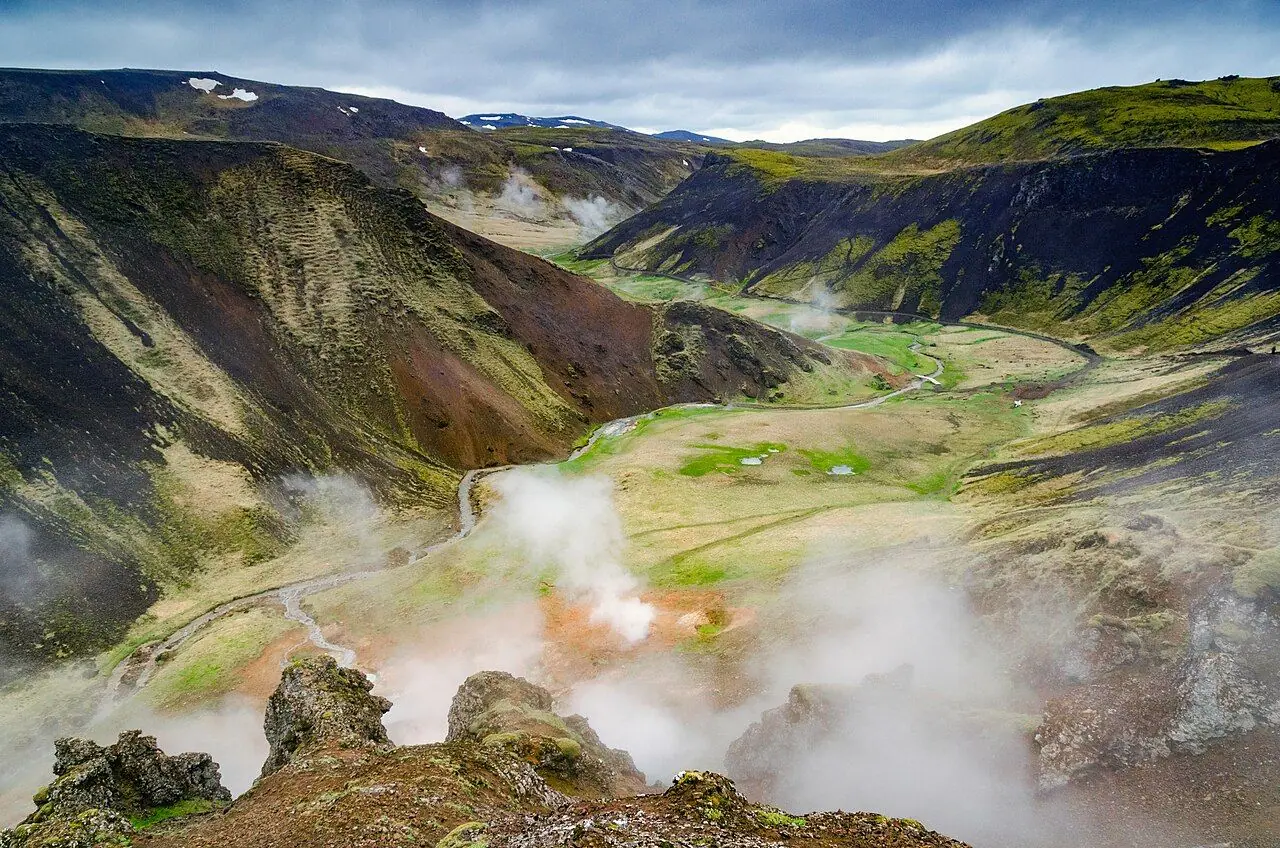
How about bathing in a warm river in the middle of the mountains? Not a tiled lagoon with a wristband and a swim-up bar, but a real mountain stream. It is heated from below by the volcanic system under Hengill, and it flows through a valley that steams on every side. This is Reykjadalur, which means "Steam Valley". It is only about 45 km from Reykjavík, just above the small greenhouse town of Hveragerði.
We have road-tripped around Iceland, but we haven't done this hike yet. It's high on our bucket list, so I've researched every detail for you. The walk up is a proper hike, not a stroll. It is a steady climb of roughly 350 m on a rocky, often muddy path. Along the way you pass bubbling mud pots, sulphur-yellow slopes and a tall waterfall dropping into a gorge. At the top, a wooden boardwalk follows the warm stream. You just pick the spot where the temperature suits you. It is hotter upstream and cooler downstream.
The best part? It is one of the few wild hot springs in Iceland you can reach without a car, thanks to a frequent Strætó bus to Hveragerði. It is also free to bathe, which is rare (and really welcome) in Iceland! So it makes a great half-day trip from Reykjavík by bus. Below I cover the route, transport, costs, safety around geothermal ground and honest advice on bringing children.
At a glance
- Distance: about 3–4 km each way from the car park, so 6–8 km return. Add roughly 3–4 km each way if you walk from the Hveragerði bus stop
- Elevation gain: roughly 340–380 m, most of it in the first half
- Allow about 45–75 minutes up and 30–45 minutes down, or 2.5–4 hours with a soak
- Difficulty: Moderate. A steep early climb, and uneven and slippery underfoot
- Route type: Out-and-back
- Start point: Reykjadalur car park (also signed as the Reykjadalur geothermal area), about 2 km north of Hveragerði town centre
- Best season: May–September for the easiest conditions, but it is open all year
- Prices: no fee to hike or bathe. Parking is paid by the hour (see below)
- Toilets: toilets and a café-restaurant (Skálinn / The Lodge) at the car park. Nothing on the trail. There are simple open-topped wooden changing screens on the boardwalk
- Suitable for children: only in a carrier or for confident young walkers. Not suitable for pushchairs
- Dogs: no specific ban found. If you bring one, keep it on a lead and well away from hot pools, vents and other bathers (check the signs at the trailhead)
Route description
Car park to the first climb
From the car park beside the café, the path heads north into the valley and soon crosses the river on a footbridge. Shortly after, the climbing begins. This first section is the steepest of the whole route. It is a wide, well-trodden gravel track that zigzags uphill, and you can expect around 20–25 minutes of steady effort. In wet weather, or during the spring thaw, it can turn into slippery mud. In winter it is often icy.
As you get higher, look back for wide views over Hveragerði and the flat farmland of the south coast towards the sea.
Steam vents and mud pools
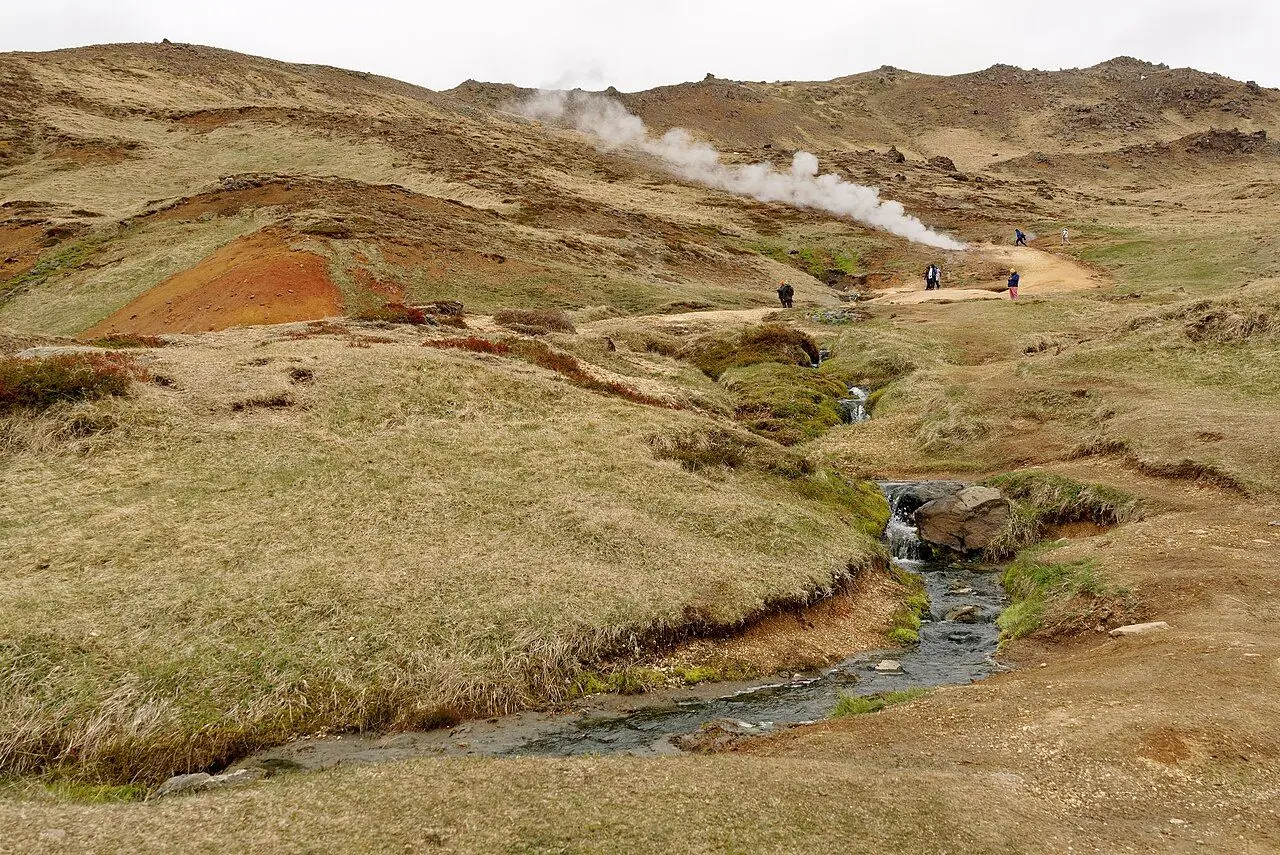
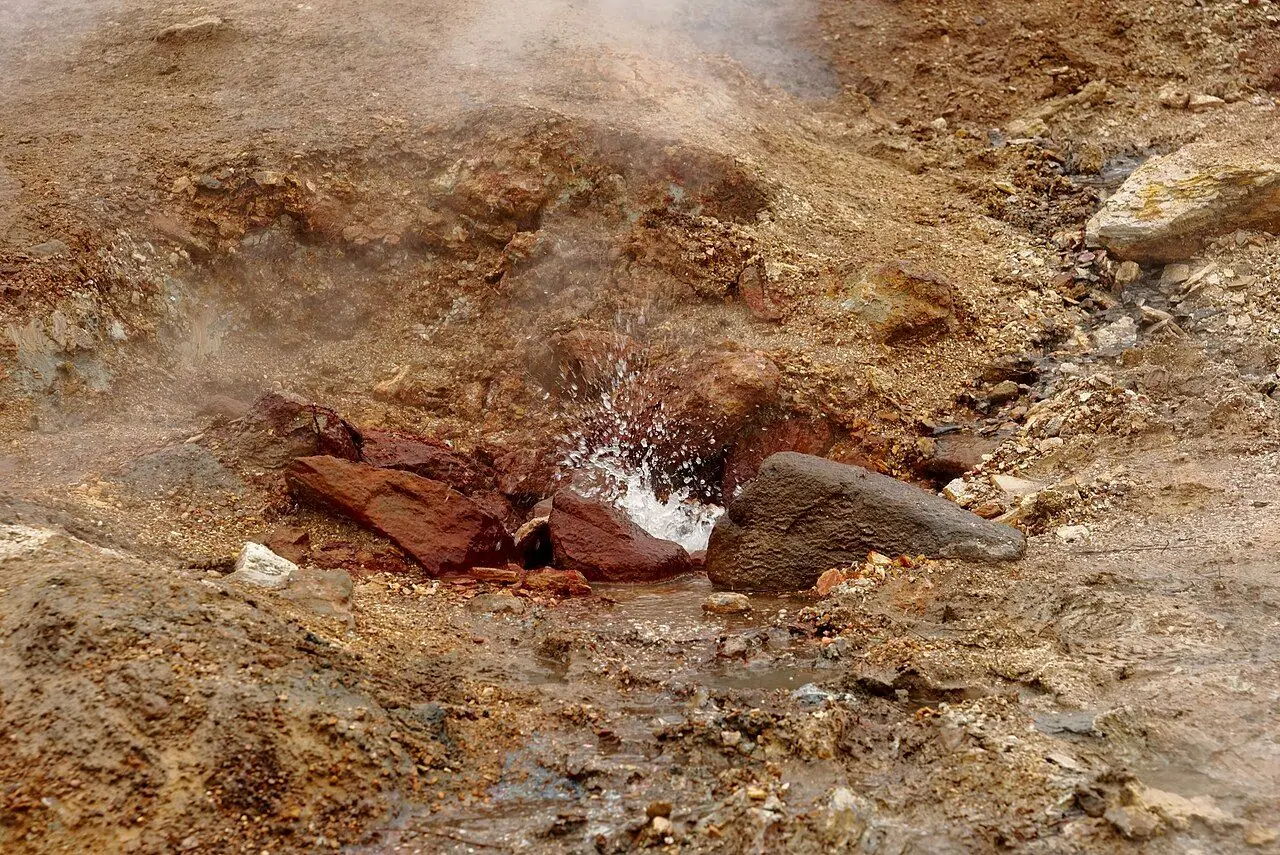
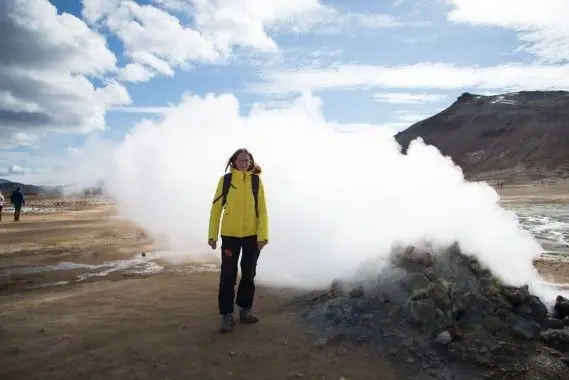
Once you are over the first rise, the valley changes. Steam drifts out of the hillside, and grey mud pools bubble in side gullies. You will smell sulphur too. These features are fascinating but really dangerous. The crust of earth around them can be thin, and the water and mud underneath can be close to boiling. The marked path keeps a safe distance, so stay on it and keep children close!
Djúpagilsfoss waterfall
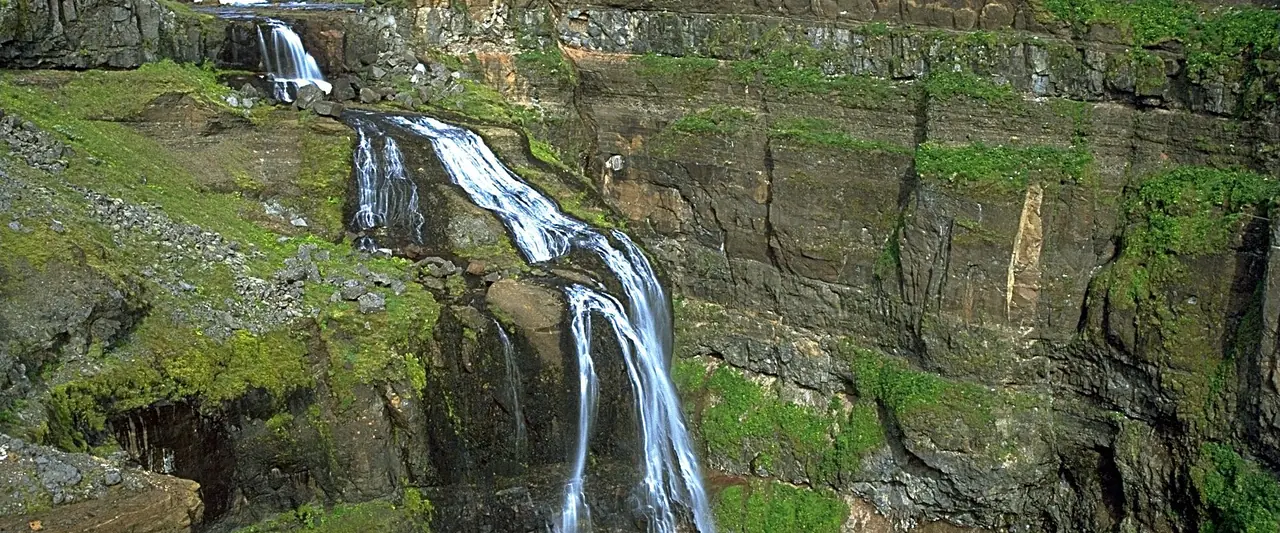
Around halfway, the path runs along the edge above a deep gorge, with Djúpagilsfoss (sometimes written Djúpagil) waterfall dropping into it. It is a good place for a breather and a photo. However, admire it from the trail, as the ground near the gorge edge is unstable.
Upper valley to the bathing area
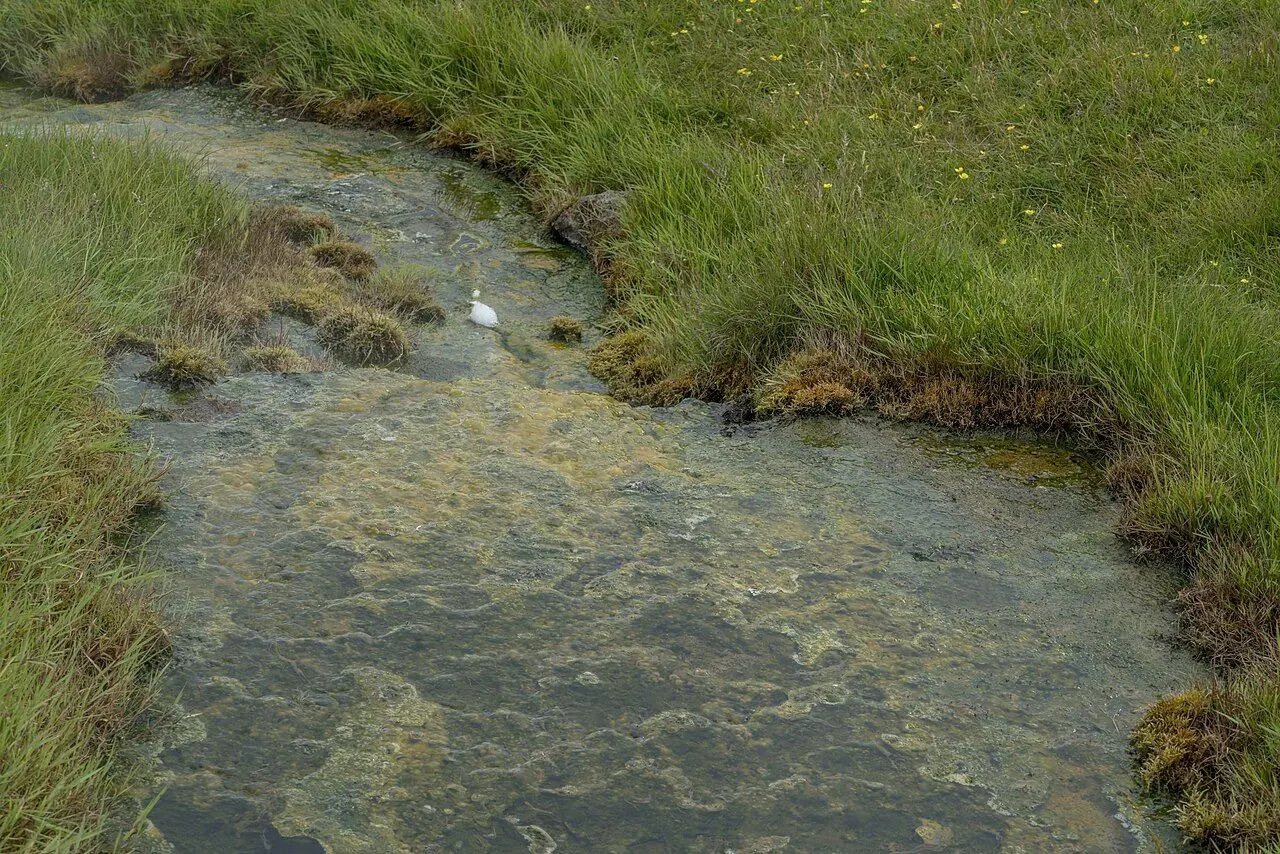
After the waterfall the path gets easier and rolls gently across the upper valley, crossing a couple of small streams. From here you follow the Reykjadalsá river. Hot water flows down from the Klambragil ravine further up and mixes with cold stream water. That is why the river is warm.
You know you have arrived when you reach a long wooden boardwalk beside the stream, with a few wooden changing screens along it. This is the official bathing area. Walk upstream for warmer water or downstream for cooler. Most people find a comfortable spot somewhere in the middle. Do not go above the marked bathing area, because upstream the water can scald.
Returning
Go back the same way. The descent is quicker but harder on the knees. The steep, loose first section (now your last) is where most slips happen, especially when you are tired and warm from bathing. So take it slowly.
How to get there
By public transport
Hveragerði is well served by Strætó, Iceland's public bus network. Route 51 runs between Mjódd (Reykjavík's main suburban bus interchange) and Selfoss, and it stops in Hveragerði. From January 2026 Strætó added more weekday buses on this route. The published timetable shows around 16 departures each way on weekdays and 7 each way at weekends. The journey takes about 40 minutes. You can reach Mjódd on Reykjavík city buses.
From the Hveragerði stop, you walk roughly 3–4 km (about 45 minutes) north through town to the trailhead car park. Just follow the signs for Reykjadalur. This adds quite a lot to the day, so plan for a 5–6 hour trip from the bus. There are sometimes taxis in Hveragerði, but don't count on one.
Timetables change, sometimes several times a year. Check the current times on the Strætó website (straeto.is) or the Klappið app, where you can also buy tickets.
By car and parking
Hveragerði is right beside Route 1 (the Ring Road), around 45–60 minutes' drive east of Reykjavík. Drive through town following the signs for Reykjadalur to the car park at the end of the road.
Parking: You pay by the hour, and number-plate cameras check it. Recent reports say it costs around 200–250 ISK per hour. You pay by card at the machines or with the Parka or EasyPark apps. Cash isn't accepted. Rates change, so check the signs when you arrive.
Permits, fees & opening times
- Bathing: Free. There is no ticket, booking or entry fee for the hike or the river.
- Parking: Hourly charge (see above).
- Opening: The trail is open all year, 24 hours a day. The facilities at the car park have their own hours. The café serves light meals and cakes, usually from around midday.
- Rules: Stay on marked paths, bathe only at the boardwalk area and take all your rubbish home. There are no bins on the trail.
When to go
Summer (June–August) has the easiest conditions. The trail is drier and firmer, the valley is green and the days are long. So you can go late in the evening when the day-trip crowds have gone. However, it is also the busiest time, especially around midday.
Spring and autumn (May, September–October) are quieter and often beautiful, with autumn colours in the moss and heather. Unfortunately, the path can be very muddy, especially during the spring snowmelt.
Winter (November–March) is magical, with steaming water in a snowy valley. But it is much more serious. The trail is often icy and snowy, the days are extremely short (only around four to five hours of daylight in December) and the weather can change quickly. Microspikes or crampons are essential. Avoid the walk in storms or high winds. Iceland's weather and road conditions are posted on safetravel.is and vedur.is, so check both before you set off.
Hiking with kids
Many families can do Reykjadalur, but it is not a gentle stroll.
- Pushchairs: Not suitable, even all-terrain ones. The first climb is steep and rough, and the path is narrow and muddy in places. A sturdy back carrier is the way to go for little ones.
- Suitable for children: Active children from around 6 can usually walk it themselves. The steep start is the hardest part, and after that it gets easier. Allow extra time.
- Hot water and vents: This is the big one. Hold hands near steam vents and mud pools. Test the water yourself before letting a child in, and keep small children in the cooler downstream parts. Babies and toddlers are more sensitive to heat, so keep their soaks short.
- Keeping them engaged: Turn it into a geothermal treasure hunt. Who can spot the first steam vent, the yellow sulphur rocks, the bubbling mud and the waterfall? The promise of a "warm river bath" at the top is usually motivation enough.
- Back in town: At the Hveragerði Geothermal Park, children can boil an egg in a hot spring. How cool is that? It goes really well with the hike.
What to pack
- Swimwear (wear it under your clothes, so you don't need the open changing screens)
- A quick-dry towel or changing robe, plus a dry bag for wet things
- Sturdy, waterproof walking boots with good grip
- Warm layers, a waterproof jacket and a hat, as you cool down fast after bathing
- Microspikes in winter and shoulder seasons, plus a head torch
- Water and snacks (no facilities on the trail)
- Flip-flops or water shoes for the rocky riverbed
- A bag to carry out all rubbish
Safety tips
- Stay on the marked path. The ground around hot springs can be a thin crust over boiling water or mud. People have been badly burned in Iceland by stepping off trails.
- Bathe only in the official area by the boardwalk, and test the temperature with your hand first.
- Don't drink the river water and don't put your head under. It is natural, untreated water.
- Watch the time and the weather, especially in winter when daylight is short and conditions change quickly. Let someone know your plans and check safetravel.is.
- Take care on the descent, especially the steep final section, which can be icy or muddy.
- Avoid alcohol before or while bathing in hot water.
- In an emergency in Iceland, call 112.
Leave no trace & sustainable tips
- Arrive by bus. Strætó Route 51 makes this one of Iceland's easiest hot-spring hikes to reach without a car.
- Stick to the path. Icelandic moss takes decades to recover once it is trampled, and the valley is very busy.
- Pack it in, pack it out. There are no bins on the trail. That includes tissues, food scraps and drink cans.
- Use the toilets at the car park before you set off, as there are none in the valley.
- No soaps, shampoos or sun cream in the river. Keep it clean for the next person and for the stream life downstream.
- Spend locally. Have a coffee at the trailhead café, or eat in Hveragerði afterwards, rather than bringing everything from Reykjavík.
Where to stay & eat nearby
Eat:
- Skálinn (The Lodge) at the trailhead serves cakes, soup and light meals. It sounds like a cosy stop after the walk.
- Gróðurhúsið (The Greenhouse) in Hveragerði is an indoor food hall with several vendors, from noodles to fried chicken, plus an ice-cream counter.
- Hveragerði is home to the Kjörís ice-cream factory, so a post-hike cone is practically compulsory!
Stay:
- Hótel Örk is a long-established hotel in Hveragerði with a pool, which is handy for families.
- The town also has guesthouses, a hostel and a campsite. Selfoss, 15 minutes away on Route 51, has a wider choice of accommodation and supermarkets.
More to explore nearby
- Hveragerði Geothermal Park: a small park in the town centre where you can see hot springs up close, boil an egg in steam and try a clay foot bath.
- Laugaskarð swimming pool: Hveragerði's outdoor geothermal pool, ideal for a proper wash and soak after the hike.
- Earthquake exhibition at the Sunnumörk shopping centre. It shows a crack left by the 2008 earthquake and has a simulator.
- Selfoss and the Golden Circle (Þingvellir, Geysir and Gullfoss) are within easy reach, although you will need a tour or a car for most of the Golden Circle.
- Hengill area: experienced hikers can continue on longer marked trails into the Hengill volcanic area. Only try these with a map, good weather and proper kit.
FAQ
Is Reykjadalur free? Yes, hiking and bathing are free. The only charge is for parking at the trailhead, paid by the hour.
How long does the Reykjadalur hike take? Most people take 45–75 minutes to walk up and 30–45 minutes to come down. With time to soak, allow 2.5–4 hours from the car park, or 4–6 hours if you walk from the Hveragerði bus stop.
Can you get to Reykjadalur without a car? Yes. Take Strætó Route 51 from Mjódd in Reykjavík to Hveragerði (about 40 minutes), then walk around 3–4 km to the trailhead. Check current times on straeto.is.
How hot is the water at Reykjadalur? It changes along the stream. It is warmer upstream and cooler downstream. Most people find a comfortable, bath-like spot near the middle of the boardwalk. Always test it first and never bathe above the marked area.
Can you hike to Reykjadalur in winter? Yes, the trail is open all year, but expect ice, snow and very short days. Microspikes, warm layers and a head torch are essential. Check safetravel.is and the weather forecast before you go.
Would you brave the hike for a soak in a warm river? Let me know in the comments!
Photo credits (4)
All photos on this page are by other photographers and are used under free licences. Thank you for sharing them.
- Cover photo: Reykjadalur Valley - Iceland.jpg by Jakub Fryš, CC BY-SA 4.0, via Wikimedia Commons. Resized and cropped for this page.
- Photo 2: Reykjadalur Valley, Iceland, 20230502 1407 4227.jpg by Jakub Hałun, CC BY-SA 4.0, via Wikimedia Commons. Resized for this page.
- Photo 3: Hveragerði05(js).jpg by Jerzy Strzelecki, CC BY-SA 3.0, via Wikimedia Commons. Resized for this page.
- Photo 4: Hot spring, Reykjadalur Valley, Iceland, 20230502 1415 4243.jpg by Jakub Hałun, CC BY-SA 4.0, via Wikimedia Commons. Resized for this page.


join the conversation
Comments
No comments yet. Be the first to share your thoughts!