🥾 Trail guide · Lesser Poland – Tatra National Park
Morskie Oko Hike: A Complete Guide to Poland's Most Famous Mountain Lake (and Czarny Staw)
- Distance
- 16 km
- Ascent
- 500 m
- Time
- 4–5 hours (6–7 hours with Czarny Staw)
- Difficulty
- Moderate
- Route
- Out-and-back
- Best season
- June–October
👶 With kids: Pushchair-friendly to Morskie Oko on the tarmac road (long and uphill); the lake loop and Czarny Staw path are rocky steps, so use a carrier. Dogs not allowed.
✅ Updated and fact-checked on 2 November 2026. Prices, timetables and rules can change, so check the official sources before you go.
This post contains affiliate links. If you book or buy through them, I may earn a small commission at no extra cost to you. More about this
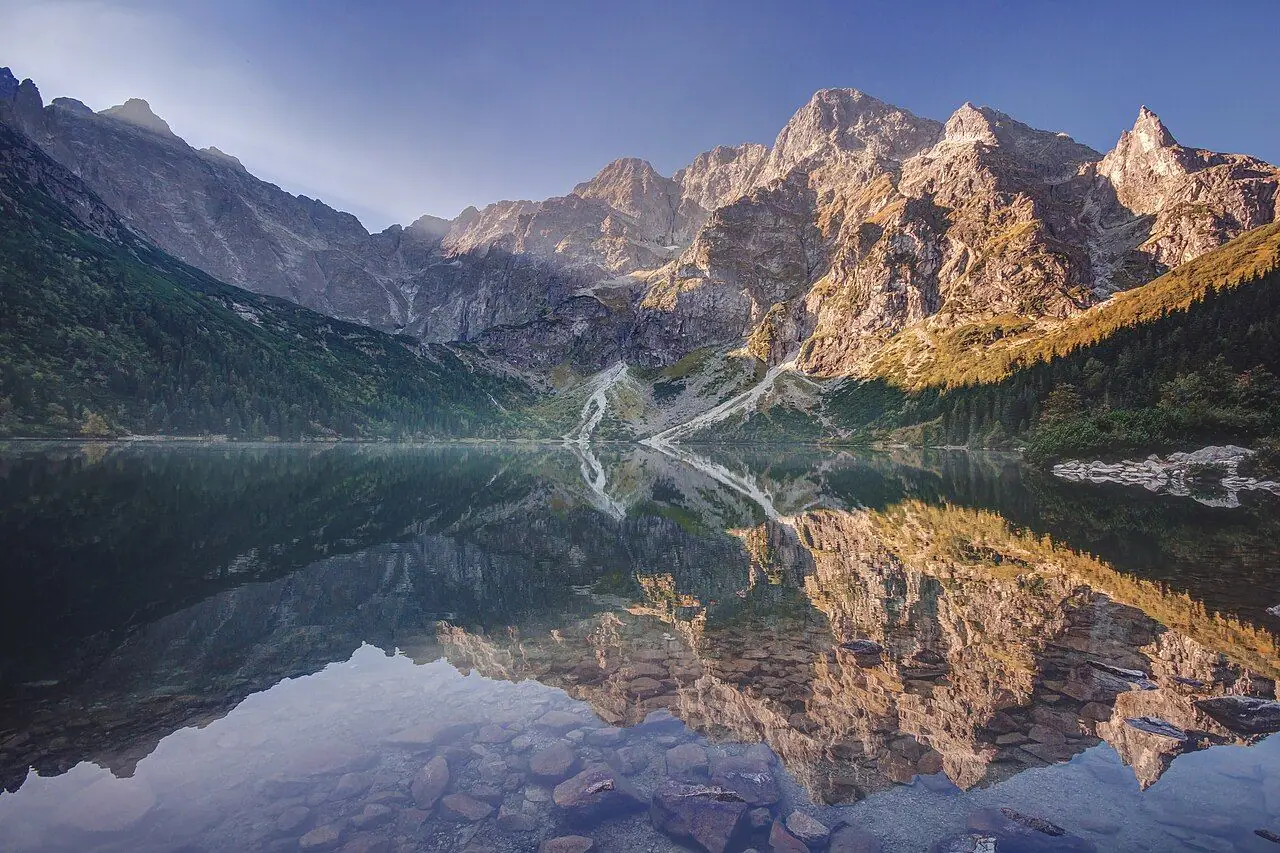
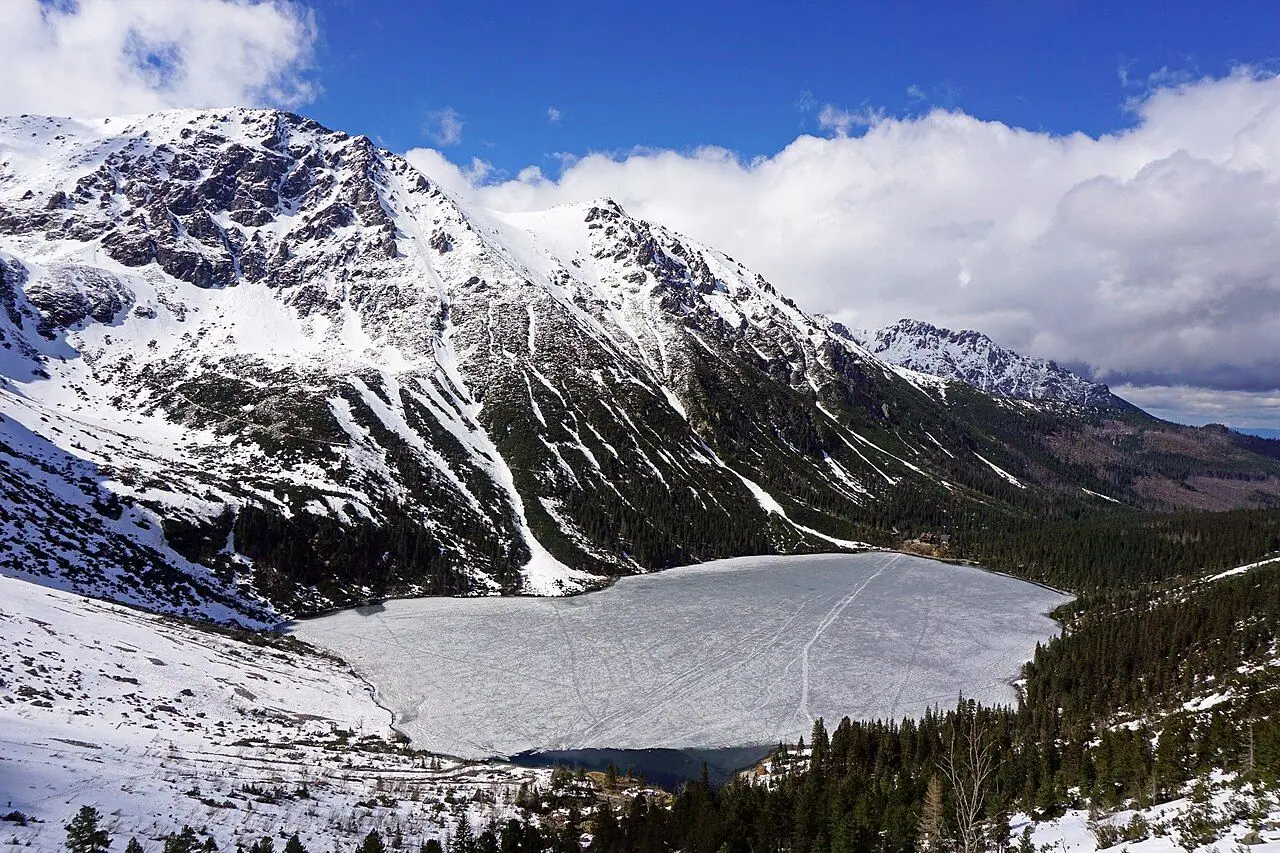
Morskie Oko means the "Eye of the Sea". It is the best-known lake in Poland and one of the most popular walks in Central Europe. The lake sits at 1,395 m in a glacial bowl, surrounded by granite peaks. One of them is the pointy Mnich ("the Monk"). Behind the cliffs rises Rysy, Poland's highest summit at 2,499 m. On a calm morning the water is a deep green-blue and the reflections are almost perfect. Stunning, isn't it?
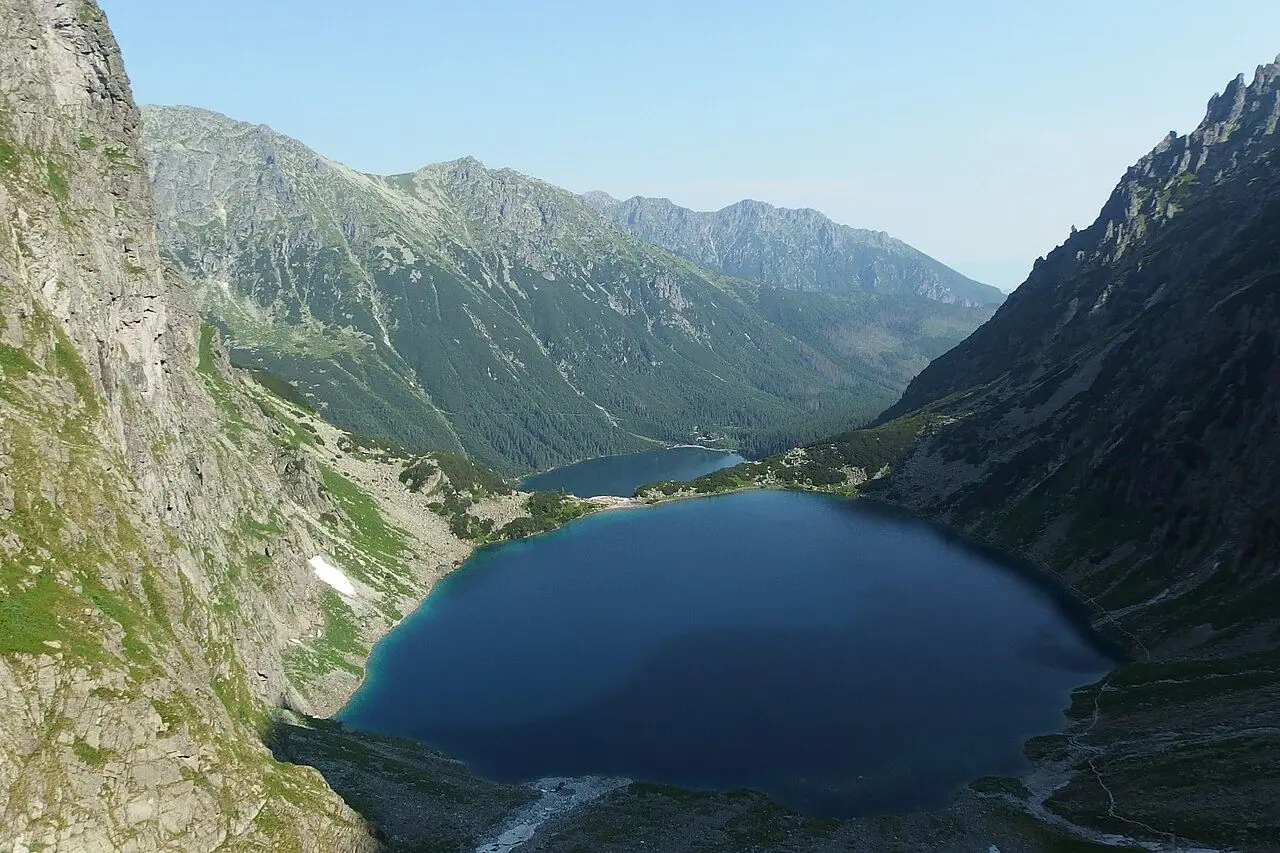
We haven't hiked this one ourselves yet, but it's high on our bucket list, so I've researched every detail for you. The walk itself is a bit unusual. Most of the way you follow a closed tarmac road. It winds gently up through spruce forest, past the Wodogrzmoty Mickiewicza waterfalls. You walk with thousands of other hikers and, for part of the way, horse-drawn carts. So it is not a wilderness experience. In 2025 more than 1.1 million people entered the park through the Morskie Oko gate! However, the first view of the lake is breathtaking. And if you continue up the steep stone path to Czarny Staw pod Rysami (the Black Tarn), you leave most of the crowds behind. This upper lake is wilder and darker, right below Rysy.
As a mum, this is the part that caught my eye: the road is surfaced all the way. So it is one of the few real high-mountain places you can reach with an all-terrain pushchair. Just be ready for a long, steady climb. Below I explain how to plan the Morskie Oko hike, with buses from Zakopane, parking, park tickets and the climb to Czarny Staw.
At a glance
- Distance: about 8 km each way from Palenica Białczańska to Morskie Oko (around 16 km return). Add about 3.5 km return for Czarny Staw, and about 2.5–3.5 km for the loop around Morskie Oko
- Elevation: from about 980 m to 1,395 m at Morskie Oko (around 500 m of ascent with the ups and downs). Czarny Staw (1,583 m) adds about 190 m more
- Allow 2–2.5 hours up and 1.5–2 hours down. With Czarny Staw and breaks, allow 6–7 hours in total
- Difficulty: Moderate. It is long but easy underfoot to Morskie Oko. The steep, rocky steps to Czarny Staw are harder
- Route type: Out-and-back
- Start: Palenica Białczańska, near Łysa Polana on the Slovak border, about 25–35 minutes from Zakopane by bus
- Best season: June to October. In winter, avalanches can close the road
- Prices: Tatra National Park entry ticket (11 zł standard, 5.50 zł reduced in 2025). Parking must be booked online
- Toilets: at Palenica Białczańska, Włosienica and the hut. You can get food at the PTTK hut by the lake
- Suitable for children: yes. All-terrain pushchairs are fine on the road. Use a carrier for the lake loop and Czarny Staw
- Dogs: not allowed
Route description
Palenica Białczańska to Wodogrzmoty Mickiewicza (about 3 km)
The walk starts at the park gate at Palenica Białczańska, where you buy or show your park ticket. Then you follow the road (red waymarks) as it climbs gently through the forest above the Białka river. There are footpath shortcuts that cut off some of the bends. However, they are steep and rocky, so stay on the road if you are pushing a buggy. After about 50 minutes you reach Wodogrzmoty Mickiewicza. These white-water cascades are right beside the road and make a lovely first stop. Since September 2026 the horse carts only run as far as this point.
Wodogrzmoty to Włosienica
Above the waterfalls the road keeps climbing in long, steady zigzags through spruce forest. You get glimpses of the peaks between the trees and pass the odd bench and information board. Higher up the views start to open up. Polana Włosienica is the old turning point for the carts. It has toilets and a stop for the park's electric buses. Ahead of you, the end of the valley is now all granite.
Włosienica to Morskie Oko (about 1.5 km)
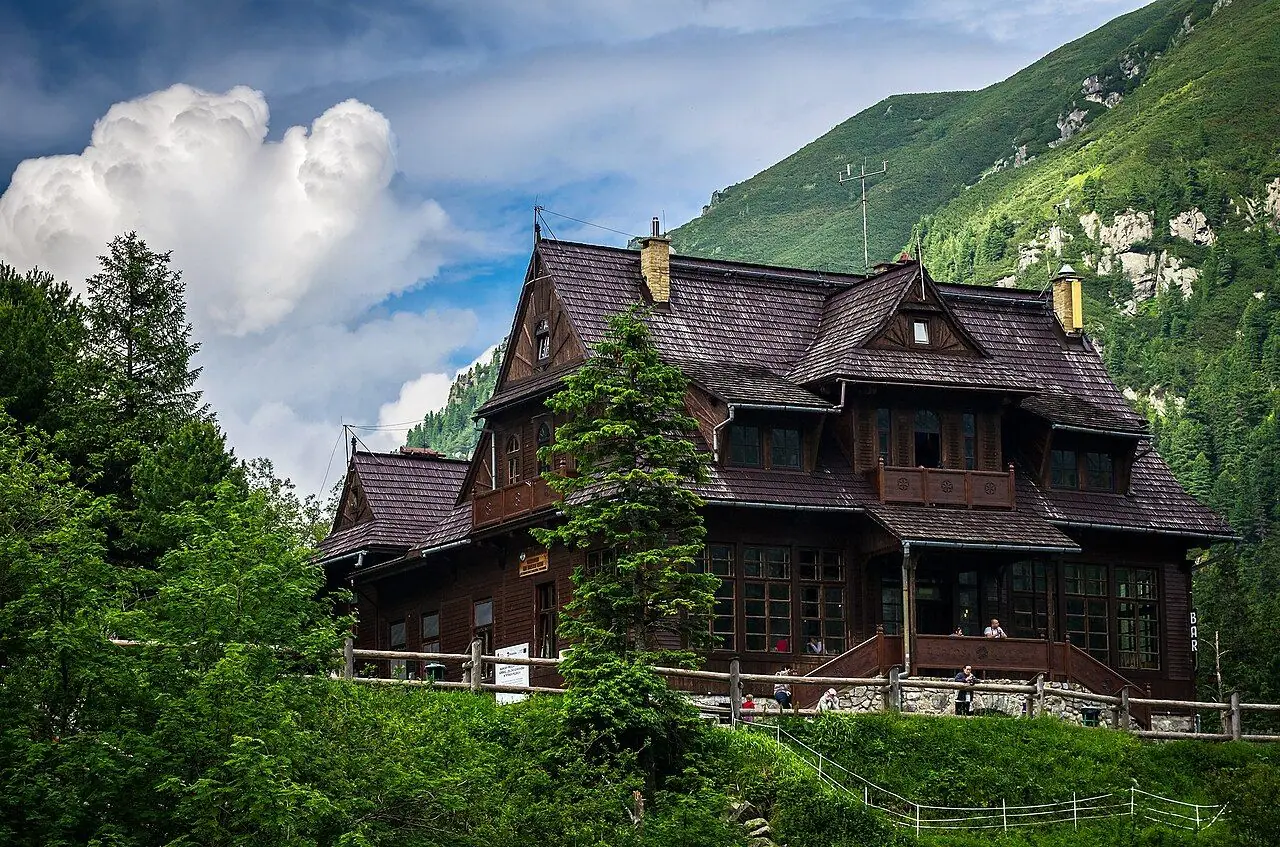
The last stretch takes about 20–30 minutes. A path, partly cobbled and partly tarmac, climbs past dwarf pine to the edge of the glacial basin. Then suddenly the lake appears, with the big wooden PTTK Morskie Oko hut (schronisko) on the shore. The hut first opened in the early 20th century. It serves hot meals, soup and the famous apple cake (szarlotka). Expect queues at peak times.
Optional: around the lake
A rocky path goes all the way round Morskie Oko and takes about 45–60 minutes. It isn't suitable for pushchairs. However, you get changing views of Mnich and the cliffs, and the far side is usually quieter.
Optional: up to Czarny Staw pod Rysami
From the hut, follow the red trail around the eastern shore to the far end of the lake. From there a steep stone staircase climbs beside a waterfall to the edge of the upper basin. It takes about 45 minutes to an hour and gains roughly 190 m. Then suddenly you are looking down on Czarny Staw, a dark, deep tarn surrounded by cliffs, with Rysy rising above it. Most people turn back here. Beyond this point the trail to Rysy is a serious high-mountain route with chains, so it is not for families or beginners. Come back down the same way, carefully. The steps can be slippery, and going down is harder on the knees than going up.
How to get there
By bus from Zakopane
Buses to Morskie Oko leave from Zakopane bus station (ul. Kościuszki) and from stops near the town centre. They take about 25–35 minutes to Palenica Białczańska. Most are run by private minibus companies, with some PKS buses too. In summer they run very often, about every 15 minutes in peak season. On the way back in the afternoon they are less frequent. Fares are low (about 15 zł in 2025), so carry cash in small notes. On summer weekends the buses fill up early, so aim to leave Zakopane by 7 am. Zakopane itself is about 2–2.5 hours from Kraków by train or regular coach.
Electric buses
Tatra National Park runs a small fleet of electric buses to Włosienica, about 1.5 km from the lake. They leave from Zakopane, and from Palenica Białczańska and Wodogrzmoty. They are mainly meant for people with limited mobility, and seats are limited. Prices: in 2026, top fares were about 89 zł from Zakopane to Włosienica and 69 zł from Palenica Białczańska. There are discounts for under-18s and seniors, and under-4s travel free. Book through the TPN website and check the current routes, as this service is still changing.
Horse carts
Since 1 September 2026, horse carts only run between Palenica Białczańska and Wodogrzmoty Mickiewicza (about 3 km). This is part of a pilot to reduce the strain on the horses. The fare uphill is about 50 zł. If animal welfare matters to you, I suggest walking or taking the electric bus instead.
By car and parking
Parking: You can't drive past Palenica Białczańska. Parking at Palenica Białczańska and Łysa Polana must be booked online in advance through the Tatra National Park e-ticket shop (tpn.pl). Cars without a booking are turned away. Prices change with the season and how early you book. Recent TPN information gives around 35–55 zł for bookings made at least three days ahead, more for last-minute bookings, and up to 75 zł per day. Parking is open from dawn to dusk between March and November. You can't stay overnight in your vehicle. In summer there are also park-and-ride options in Bukowina Tatrzańska and Białka Tatrzańska.
Permits, fees & opening times
- Park ticket: in 2025 a day ticket cost 11 zł, or 5.50 zł reduced. Seven-day tickets are also available. In 2026 the government proposed raising the price to fund mountain rescue, so check the current price on tpn.gov.pl. Buy at the gate, or online in advance to skip the queue.
- Free entry: children under 7, holders of the Polish Large Family Card, and some other groups.
- Night ban: from 1 March to 30 November, you can't walk on park trails between dusk and dawn. This is partly to protect bears. Plan to be off the trail by dark.
- Parking: online booking only, through the TPN e-ticket system.
- Closures: after heavy snowfall the road can be closed because of avalanches. In some winters they have come down from the gullies above it. Check TPN announcements and the TOPR avalanche bulletin before any winter visit.
When to go
June to October is the main season. In my opinion September and early October are the best time, with settled weather, autumn colours and fewer families than in July and August. In July and August the road is extremely busy, especially at weekends. So start at 7 am or earlier, or walk up in the late afternoon (but keep the night ban in mind). Thunderstorms often build in the afternoons in summer.
In winter and spring Morskie Oko is snowy and quieter. However, the road crosses avalanche paths and can be closed, and you will need microspikes for icy sections. The upper trail from Czarny Staw towards Rysy is serious winter terrain, so leave it alone.
Hiking with kids
Suitable for children: Morskie Oko is one of the best big mountain days in Europe for young families, because the road is surfaced the whole way. An all-terrain pushchair (or a bike trailer in walking mode) works fine up to the hut. Be ready for about 500 m of steady climbing, and use a good brake on the way down. You can't take it around the lake or up to Czarny Staw. For those parts, switch to a back carrier or let older children walk.
Children over 7 pay the reduced rate, and under-7s go free. To keep little legs going, stop at the waterfall at Wodogrzmoty, look for deer and red squirrels in the woods, and promise them szarlotka at the hut. Older, steady children (around 6–7 and up) can usually manage the steps to Czarny Staw, but hold hands on the way down. If someone gets very tired, the electric bus to Włosienica is an option, but book ahead.
What to pack
- Comfortable walking shoes. Trainers are fine for the road, but wear boots or trail shoes with grip for Czarny Staw
- Warm layers, as the lake is often much colder and windier than Zakopane
- A waterproof jacket for afternoon storms
- Water and snacks (food at the hut costs more and there are queues)
- Cash for the bus and the hut
- A sun hat and sun cream, as the upper road has little shade
- A back carrier as well as the pushchair if you plan to go beyond the hut
- Microspikes in late autumn, winter and spring
Safety tips
- Mind the dark. The road isn't lit, the night ban applies from March to November, and bears live in the park.
- Watch the weather. Thunderstorms build quickly in summer. If one is coming, head down from Czarny Staw straight away.
- Avalanches in winter. Check the TOPR avalanche bulletin and TPN closures, and never walk the road when it is officially closed.
- The Czarny Staw steps are steep and polished, so take extra care when wet.
- Don't go beyond Czarny Staw towards Rysy without mountain experience and the right gear.
- Emergency: call TOPR (Tatra Mountain Rescue) on 985 or +48 601 100 300, or 112.
Leave no trace & sustainable tips
- Take the bus. Parking is limited and has to be booked, and the minibuses from Zakopane are cheap and frequent.
- Carry your rubbish home. There are no bins along the park trails.
- Stay on the road and marked paths. Shortcuts cause erosion on fragile slopes.
- Don't feed the wildlife, including the cheeky birds around the hut.
- No swimming in the lakes, and no drones anywhere in the park.
- Think about the horses. Walking or the electric bus are kinder options.
- Visit off-peak (on weekdays, early in the day or in September) to ease the pressure on one of Poland's busiest trails.
Where to stay & eat nearby
- PTTK Morskie Oko hut: a historic mountain hut by the lake with dorms and private rooms. Book well ahead for summer. Staying here means you can enjoy the lake at dawn before the day crowds arrive. How cool is that?
- Roztoka hut (Schronisko w Dolinie Roztoki): a quieter hut a short walk off the road near Wodogrzmoty, good for a meal or a peaceful stay.
- Zakopane: the main base, with everything from hostels to spa hotels and plenty of traditional highland restaurants (karczmy).
- Bukowina Tatrzańska and Białka Tatrzańska: quieter villages closer to Palenica, with guesthouses and thermal baths.
More to explore nearby
- Dolina Pięciu Stawów Polskich: the Valley of the Five Polish Lakes, reached via the Roztoka valley and the Siklawa waterfall.
- Rusinowa Polana and Gęsia Szyja: easy meadows with big views of the High Tatras, starting near Palenica.
- Dolina Kościeliska and Dolina Chochołowska: gentle, buggy-friendly valley walks west of Zakopane.
- Kasprowy Wierch cable car: a quick way up to the ridge from Zakopane.
- The Slovak Tatras: just over the border at Łysa Polana.
FAQ
Do I need to book parking for Morskie Oko? Yes. Parking at Palenica Białczańska and Łysa Polana can only be booked online through the Tatra National Park e-ticket system. Cars without a booking are turned away. If you take the bus from Zakopane, you avoid the problem altogether.
How long is the walk to Morskie Oko? About 8 km each way from Palenica Białczańska on a tarmac road. It takes around 2–2.5 hours up and 1.5–2 hours down.
Can I take a pushchair to Morskie Oko? Yes, the road is surfaced the whole way to the lake, but it is a long, steady climb. The path around the lake and the climb to Czarny Staw are rocky steps, so bring a carrier for those.
How much is the Tatra National Park ticket? In 2025 it was 11 zł standard and 5.50 zł reduced, and children under 7 go free. A price rise was proposed in 2026, so check tpn.gov.pl before your visit.
Is it worth going up to Czarny Staw? Yes, definitely, if you have the energy. It is only 45–60 minutes of steep steps from Morskie Oko and it is much quieter. The view of the dark tarn under Rysy is one of the best in the Tatras.
Have you been to Morskie Oko? Did you make it up to Czarny Staw? Let me know in the comments!
Photo credits (4)
All photos on this page are by other photographers and are used under free licences. Thank you for sharing them.
- Cover photo: Morskie Oko o poranku.jpg by Aneta Pawska, CC BY 3.0, via Wikimedia Commons. Resized and cropped for this page.
- Photo 2: Czarny Staw pod Rysami 07.JPG by SkyMaja, CC BY-SA 4.0, via Wikimedia Commons. Resized for this page.
- Photo 3: Schronisko morskie oko.jpg by Jar.ciurus, CC BY-SA 3.0 pl, via Wikimedia Commons. Resized for this page.
- Photo 4: Frozen Morskie Oko 2019.jpg by kallerna, CC BY-SA 4.0, via Wikimedia Commons. Resized for this page.


join the conversation
Comments
No comments yet. Be the first to share your thoughts!