🥾 Trail guide · Crete – Chania
Samaria Gorge Hike: A Complete Guide to Crete's Greatest Walk
- Distance
- 16 km
- Ascent
- 100 m
- Time
- 5–7 hours
- Difficulty
- Challenging
- Route
- Point-to-point
- Best season
- Mid-May–June and September–October
👶 With kids: Not pushchair-friendly and long for young children. Under-18s enter free; best for sturdy, experienced walkers aged about 10+.
✅ Updated and fact-checked on 2 November 2026. Prices, timetables and rules can change, so check the official sources before you go.
This post contains affiliate links. If you book or buy through them, I may earn a small commission at no extra cost to you. More about this
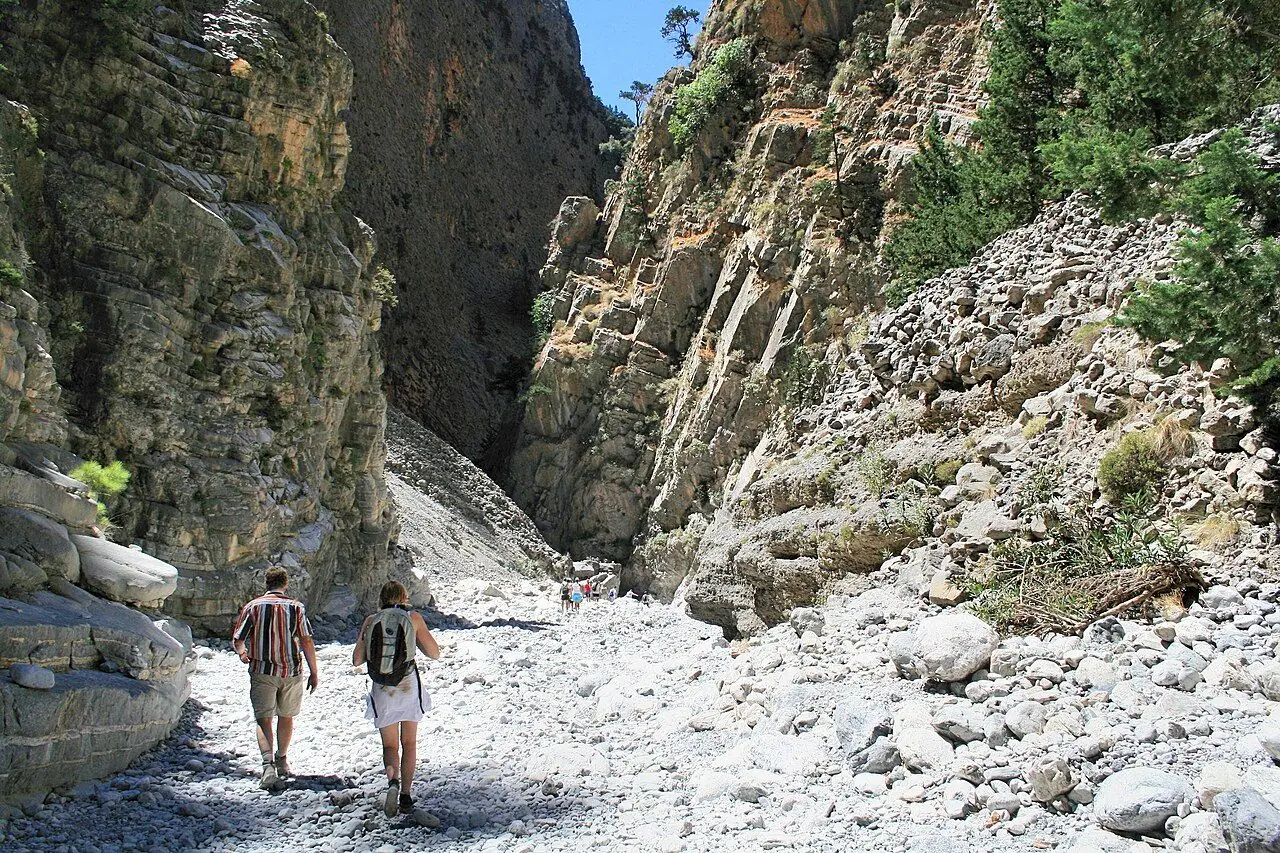
How many day hikes finish on a beach, with a boat ride home? The Samaria Gorge in Crete does! You start in the cool air of the Omalos plateau at around 1,250 metres, surrounded by the White Mountains (Lefka Ori). Several hours and one very long descent later, you walk out onto a pebble beach on the Libyan Sea. From there the only way onwards is by boat. On the way you pass pine and cypress forest, an abandoned village, a riverbed of white boulders and finally the Gates (Sideroportes or "Portes"). Here the cliffs close in to just a few metres apart and rise hundreds of metres above you.
We haven't hiked the Samaria Gorge ourselves yet, but it is high on our bucket list, so I've researched every detail for you. The gorge is the heart of the Samaria National Park. It was created in 1962, partly to protect the kri-kri, Crete's wild goat. Today it is one of the most popular days out on the island. On a peak-season morning, thousands of people set off down the zigzags from Xyloskalo. However, the gorge is so huge that the crowds spread out. The logistics are part of the adventure too: an early bus up into the mountains, a long walk down to the sea, and a ferry along the south coast as the sun goes down.
In this guide I cover everything you need to do it without a car: the season, tickets, the KTEL bus to Omalos and the evening ferry back from Agia Roumeli.
At a glance
- Distance: about 13 km inside the national park, plus about 2–3 km from the park exit to Agia Roumeli village and harbour. Most sources give 15–16 km in total.
- Elevation: around 1,200 m of descent from Xyloskalo (about 1,230–1,250 m) to sea level, with only around 100 m of climbing
- Allow 5–7 hours including rests
- Difficulty: challenging. The path is not technical, but the long, steep descent and the loose stones and boulders are hard on the knees.
- Route type: point-to-point, Xyloskalo (Omalos) to Agia Roumeli
- Start: Xyloskalo entrance, Omalos plateau, about 40 km south of Chania
- Finish: Agia Roumeli, on the south coast (no road access, ferry only)
- Season: usually May to October, weather permitting. In 2026 the gorge opened on 19 May.
- Prices: €10 adult day ticket (from 2025). Under-18s, over-65s and several other groups enter free. Check the current fees on the NECCA ticket site.
- Toilets: toilets and drinking-water taps at rest areas along the way, and a large rest stop at Samaria village. First-aid staff are on duty, and there are tavernas in Agia Roumeli.
- Suitable for children: no pushchairs. It is long and tough for young children.
- Dogs: park rules don't allow pets to roam freely, so a dog must stay on a lead. The heat and the distance make this a poor walk for most dogs.
Route description
Xyloskalo and the "wooden staircase" (km 0–2)
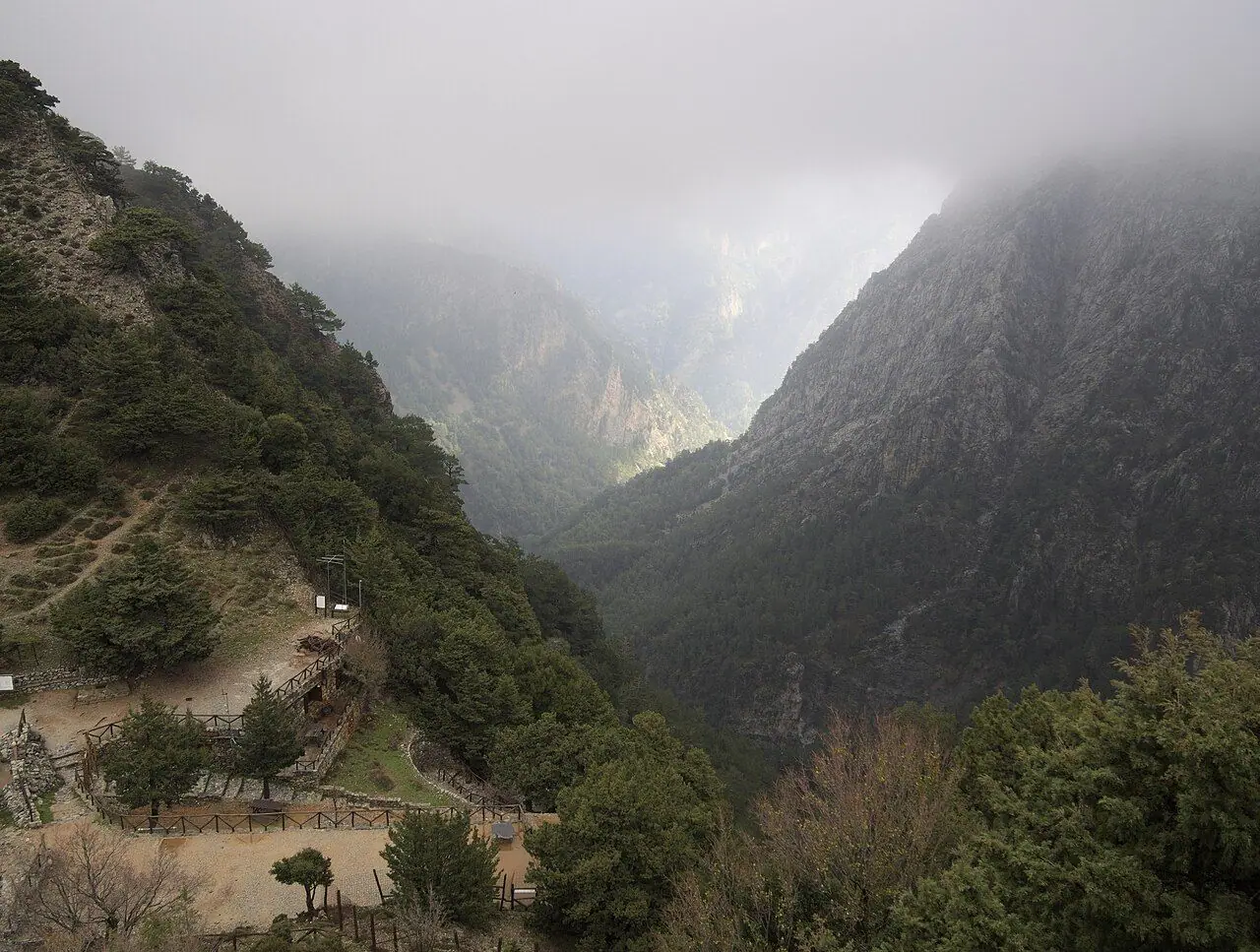
The walk starts at the Xyloskalo entrance on the edge of the Omalos plateau, where you show your ticket. Keep it, as they check it again at the exit. Free helmets are available at both entrances. Wearing one is optional, but I strongly recommend it because of rockfall. The first stretch is the steepest. A stony path with wooden rails zigzags down a forested slope, and you lose several hundred metres of height in the first couple of kilometres. Above you is the grey limestone face of Gingilos, and the air smells of pine and cypress. Take this section slowly, as this is where tired knees and slips start.
Down through the forest to Agios Nikolaos
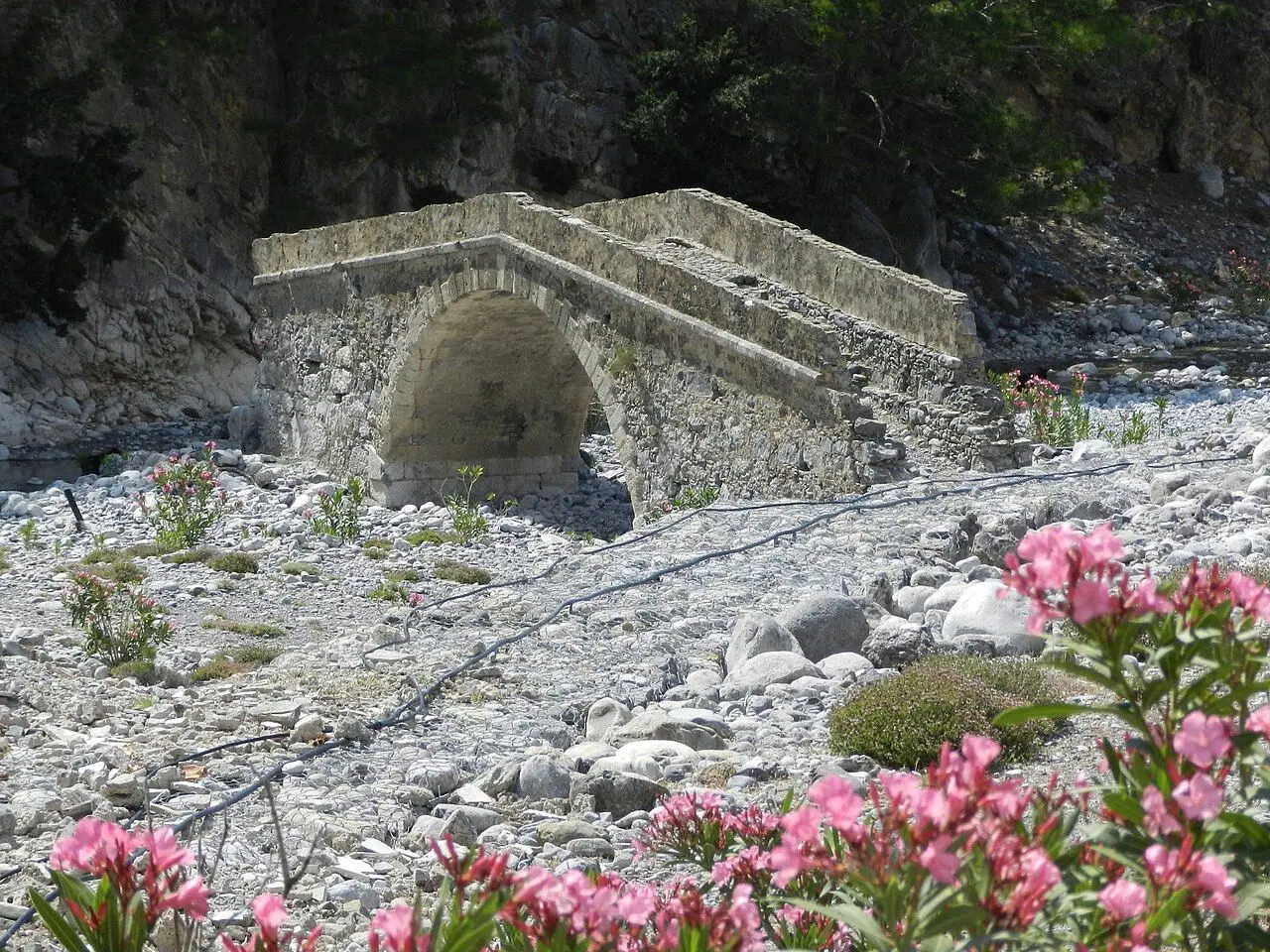
The path gets less steep as it reaches the floor of the gorge, and you start to follow and cross the streambed. Shady rest areas with taps and toilets come at regular intervals. The small chapel of Agios Nikolaos, among huge old cypresses, is a peaceful place to stop. From here the walk changes. There is less steep descent and more walking on rocks and gravel, and you cross the stream on stepping stones and small bridges more often.
Samaria village (about km 7–8)
Roughly halfway down you reach the abandoned village of Samaria. Its last residents left when the national park was created. It is the main rest stop, with shade, toilets, water, rangers and first aid. This is also where you are most likely to spot kri-kri wandering among the stone houses. Admire them, but please don't feed them! Have your lunch here and refill your water bottle.
The narrows and the Gates (about km 11–13)
Below the village, the gorge gets deeper and narrower, and the walls rise higher. The path follows the riverbed and crosses it again and again. Early in the season, after a wet winter, you might get wet feet. Then comes the highlight everyone is waiting for: the Gates. Here the cliffs close to about 3–4 metres apart and rise to around 300 metres or more above you. Shortly afterwards you leave the national park at the southern checkpoint.
Out to Agia Roumeli (final 2–3 km)
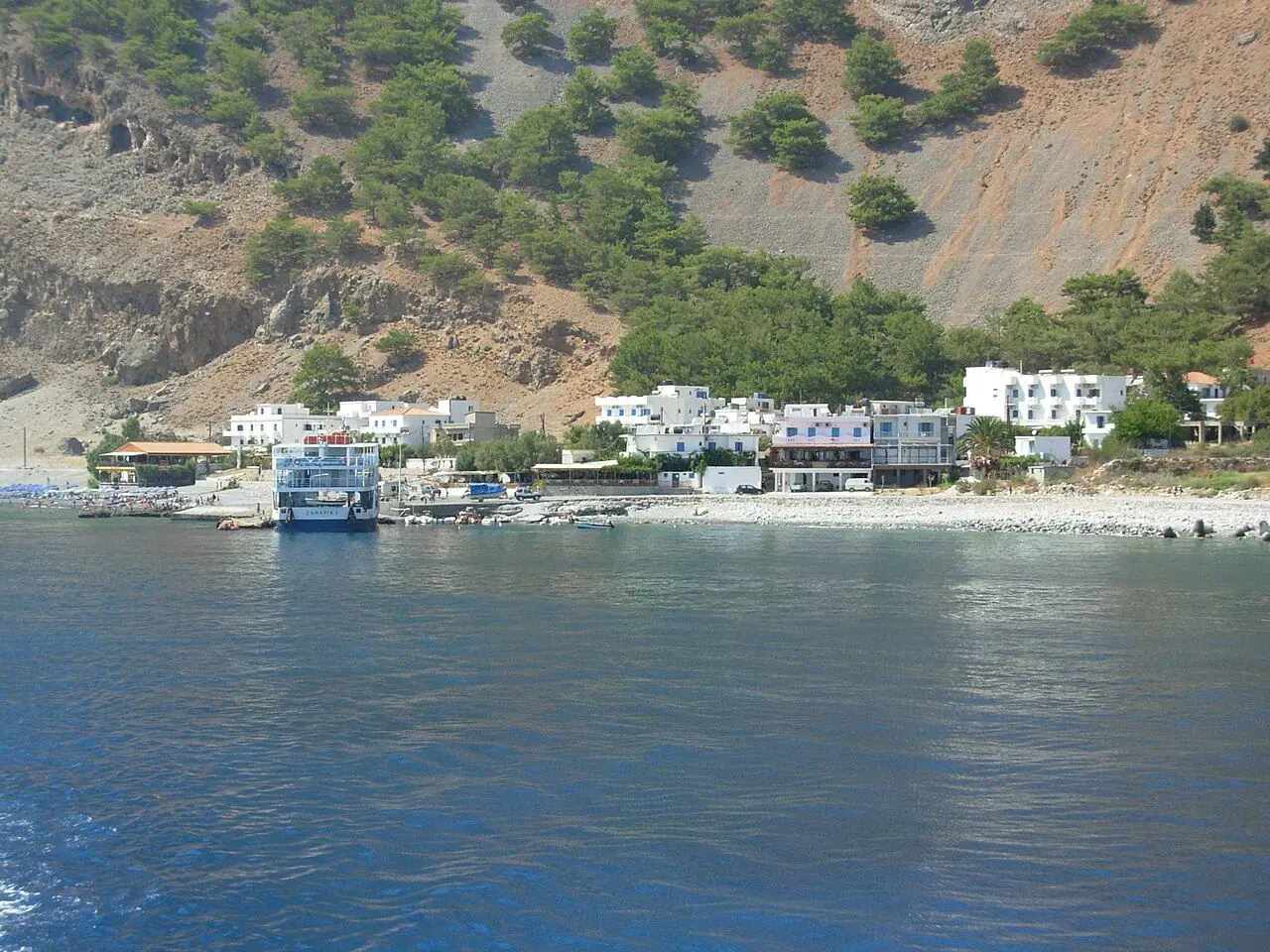
The last stretch to the sea is on an easier, hotter track. It passes the ruins of old Agia Roumeli and reaches the modern village on the coast. Your reward is a cold drink at a taverna and a dip in the clear, chilly sea. Then head to the harbour and buy your boat ticket in good time.
The "lazy way"
If the full descent is too much, you can walk up into the gorge from Agia Roumeli as an out-and-back. Go as far as the Gates or beyond, and come back the same way. You can only reach Agia Roumeli by boat.
How to get there
By bus to Omalos (Xyloskalo)
KTEL Chania-Rethymno runs early-morning buses from Chania bus station to Xyloskalo during the gorge season. The 2026 announcement lists departures at 5 am, 7:45 am and 8:45 am. The journey takes about an hour or a little more. KTEL also lists a morning bus from Sougia up to Xyloskalo. Book tickets at e-ktel.com and check the timetable the day before, as departures change with the seasons and depend on the gorge being open.
By ferry from Agia Roumeli
Agia Roumeli has no road, so you leave by boat with ANENDYK (anendyk.gr). The main evening departures are timed for hikers. KTEL's 2026 information shows a boat at 5:30 pm to Chora Sfakion (east, usually stopping at Loutro) or Sougia (west, with some sailings continuing to Paleochora). The crossing to Sougia takes about 45 minutes, and to Chora Sfakion about an hour or a little more. Fares depend on where you go, so check the current timetable and prices on anendyk.gr. Buy your ticket at the harbour office as soon as you arrive.
Back to Chania
KTEL buses meet the ferry. In 2026 they left Chora Sfakion at 6:30 pm and Sougia at 6:15 pm for Chania. KTEL also lists a 6:15 pm bus from Sougia back up to Xyloskalo, which is useful if you left a car on the plateau. Expect to be back in Chania mid to late evening.
By car
You can drive to the Xyloskalo car park on the Omalos plateau. However, the walk is one-way, so you will need the ferry and a bus back up to Omalos to collect the car. Most walkers with a car park in Chania and take the bus, or join an organised day trip.
Permits, fees & opening times
- Prices: €10 for an adult day ticket from May 2025. There are reduced group and family rates and a season pass. You can buy online at samaria-tickets.necca.gov.gr or at the entrances. Fees have changed recently, so check the current price.
- Free entry: under-18s, over-65s, EU students, people with disabilities plus one companion, and several other groups. Entry is also free on some environmental awareness days.
- Opening times: KTEL's 2026 notice says you can enter for the full crossing between 7 am and 1 pm, and everyone must be out of the park by 6 pm. After 1 pm, usually only short sections near each entrance are open.
- Season: usually from May (depending on spring water levels and maintenance) until October. The gorge can close at short notice because of heavy rain, high river levels, rockfall risk, strong wind or extreme heat. In June 2024 it closed for several days during a heatwave.
- Ticket check: keep your ticket, as they check it when you leave so the rangers know everyone is out.
When to go
Late May and June bring flowing streams, green plane trees and comfortable temperatures. However, some early-season crossings can be wet. September and October are warm and settled, and the sea is perfect for your end-of-walk swim. July and August are very hot and very busy, so take the first bus and carry plenty of water. Rain at any time can close the gorge, because of the risk of flash floods and rockfall. The night before, check the KTEL announcements, the NECCA site or the Xyloskalo forest office.
To avoid the worst of the crowds, catch the earliest bus, or stay overnight in Omalos and be at the gate when it opens.
Hiking with kids
There is no minimum age, and children under 18 go free, but be realistic. It is a long day, the descent from Xyloskalo never seems to end, and parts of the path are loose and rocky. A pushchair or bike trailer is out of the question. Carrying a toddler in a back carrier for 16 km downhill on uneven ground is hard work and really tough on your knees. The old park advice was to think carefully before bringing small children.
Suitable for children: for confident walkers of about 10 and over who already enjoy long days out, it will be an unforgettable adventure. Keep them busy by spotting kri-kri, counting stream crossings, finding the chapel and racing to the Gates. Also promise them a swim and an ice cream in Agia Roumeli! With younger children, I suggest doing the "lazy way" up from Agia Roumeli to the Gates and back instead.
What to pack
- Trail shoes or boots with good grip (flip-flops are not accepted)
- Trekking poles for the knee-jarring descent
- At least 1.5 litres of water to start with (you can refill at the rest areas)
- A picnic lunch and snacks, as there are no shops in the park
- A sun hat, sun cream and sunglasses
- A light layer for the cool start at 1,250 m
- Swimming things and a small towel for Agia Roumeli
- Cash for the ferry and bus, and your gorge ticket
Safety tips
- Rockfall is a real risk. A fatal landslide in September 2024 led to new safety measures. Wear a free helmet, don't hang around under steep, loose slopes, and follow the rangers' instructions and warning signs.
- Weather alerts: the park uses a nowcasting system to warn of severe weather. If the gorge is closed, don't try to go in.
- Watch your timing: you must be out by 6 pm, and the last ferries leave in the late afternoon. If you are slow or have blisters by Samaria village, don't panic, but keep moving steadily.
- Knees and ankles: most injuries happen on the steep top section and the loose riverbed. Poles help a lot.
- Heat: drink regularly, start early, and use the shade at the rest areas.
- In an emergency call 112, or tell the nearest ranger or rest-area staff. Evacuation from the middle of the gorge is slow.
Leave no trace & sustainable tips
- Take the bus and the boat. The KTEL bus and ANENDYK ferry make this a completely car-free day, and they are much greener than a taxi or a car shuttle.
- Don't feed the kri-kri. Human food harms them and makes them dependent.
- Use the bins at the rest stops, or even better, carry all your rubbish out.
- No swimming in the river and streams inside the park. Save it for the sea.
- Stay on the main path. Leaving it needs a permit, and shortcuts cause erosion and rockfall.
- Stay overnight in Agia Roumeli or Sougia to support the small south-coast communities. It also turns a rushed day into a relaxed one.
Where to stay & eat nearby
- Omalos: a few small guesthouses and tavernas on the plateau, so you can be at the gate the moment it opens.
- Agia Roumeli: a tiny car-free village with a few rooms and seafront tavernas. I think it would be a lovely place to spend the night after the walk.
- Sougia and Loutro: quiet south-coast villages on the same ferry route, with simple rooms, tavernas and beaches. Loutro is car-free.
- Chania: the easiest base, with the KTEL bus station and lots of accommodation in every price range.
More to explore nearby
- Gingilos (2,080 m): a demanding mountain hike that starts right next to Xyloskalo.
- Imbros Gorge: a shorter, quieter gorge near Chora Sfakion.
- The E4 coastal path: walk between Agia Roumeli, Loutro and Chora Sfakion along the Libyan Sea.
- Agia Irini Gorge: a shady, gentler gorge walk that ends near Sougia.
- Chania old town: the Venetian harbour and the market hall, for a rest day.
FAQ
Can I do the Samaria Gorge by public transport? Yes. Take the early KTEL bus from Chania to Xyloskalo and walk down to Agia Roumeli. Then catch the ANENDYK ferry to Chora Sfakion or Sougia, where buses connect back to Chania.
How much does the Samaria Gorge cost? Adult entry is €10 (2025 fee), with free entry for under-18s, over-65s and several other groups. On top of that you pay the bus and ferry fares. Check current prices on the NECCA, KTEL and ANENDYK websites.
When is the Samaria Gorge open? Usually from May to October. In 2026 it opened on 19 May. You need to enter for the full crossing between about 7 am and 1 pm, and it can close on any day because of the weather.
Is the Samaria Gorge suitable for children? There is no age limit and under-18s go free. However, the long, steep descent is best for older kids who are used to walking. You can't use a pushchair. With small children, walk in from Agia Roumeli to the Gates instead.
How long does the Samaria Gorge take? Most people take 5–7 hours from Xyloskalo to Agia Roumeli, including breaks.
Have you hiked the Samaria Gorge? Any tips for us before we go? Let me know in the comments!
Photo credits (4)
All photos on this page are by other photographers and are used under free licences. Thank you for sharing them.
- Cover photo: Samaria Gorge 09.jpg by Lapplaender, CC BY-SA 3.0 de, via Wikimedia Commons. Resized and cropped for this page.
- Photo 2: Agia Roumeli lower bridge.jpg by Gerd-HH, CC BY-SA 4.0, via Wikimedia Commons. Resized for this page.
- Photo 3: Φαράγγι Σαμαριάς 3754.jpg by C messier, CC BY-SA 4.0, via Wikimedia Commons. Resized for this page.
- Photo 4: Agia Roumeli.jpg by No machine-readable author provided. Duja assumed (based on copyright claims)., Public domain, via Wikimedia Commons. Resized for this page.


join the conversation
Comments
No comments yet. Be the first to share your thoughts!