🥾 Trail guide · England – Dorset
Old Harry Rocks Walk: A Complete Guide to the Ballard Down Circular from Studland

- Distance
- 6.5 km
- Ascent
- 180 m
- Time
- 2–3 hours
- Difficulty
- Moderate
- Route
- Circular
- Best season
- April–October
👶 With kids: Lovely for kids around 4+ on foot or in a back carrier; the flat track from Studland to Old Harry (about 3.5 km return) is manageable with an all-terrain pushchair in dry weather, but the steep, rutted climb onto Ballard Down isn't. Keep children well back from the unfenced cliff edge.
✅ Updated and fact-checked on 2 November 2026. Prices, timetables and rules can change, so check the official sources before you go.
This post contains affiliate links. If you book or buy through them, I may earn a small commission at no extra cost to you. More about this
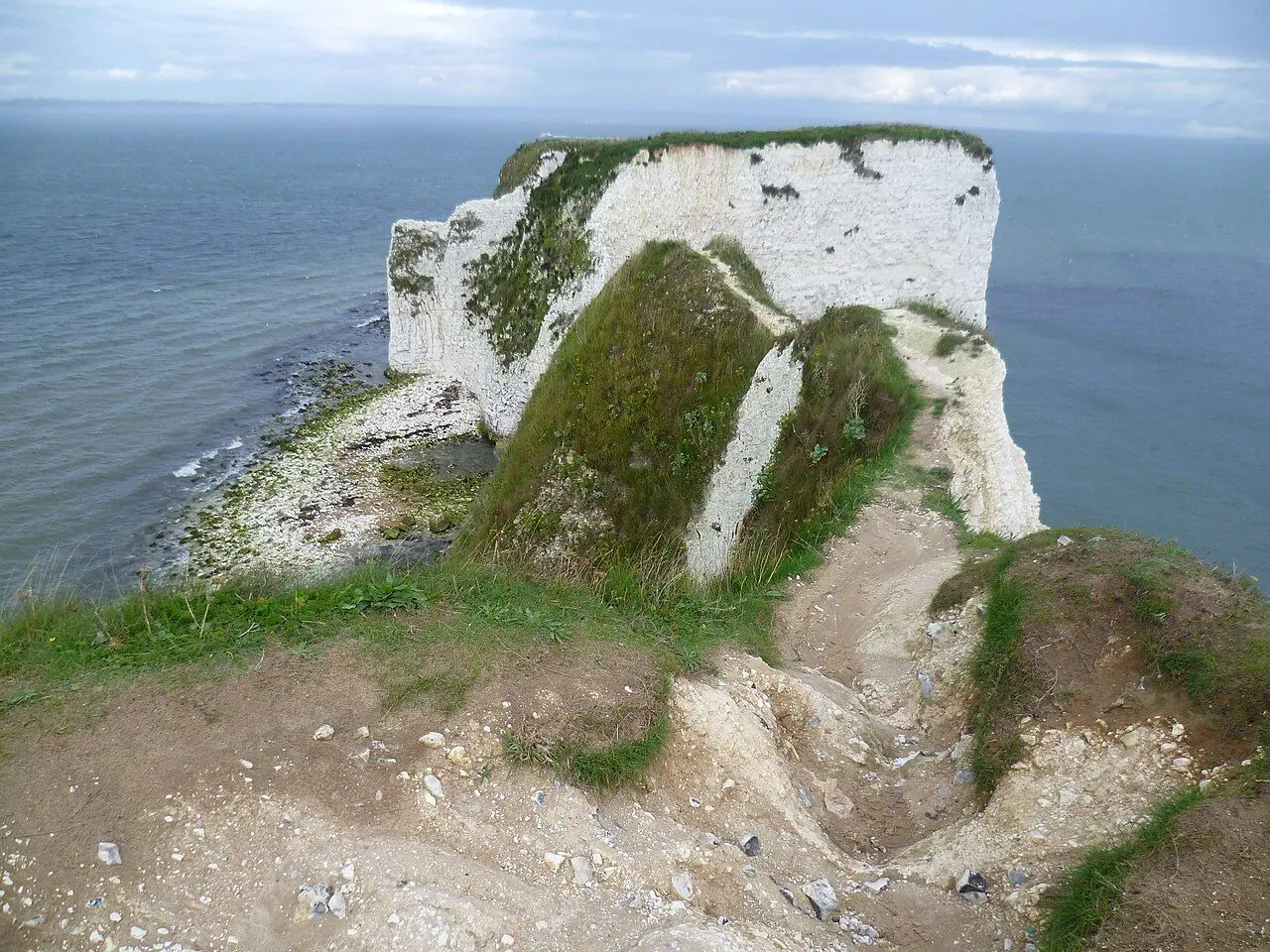
Old Harry Rocks is one of the most photographed views in Dorset. At the very eastern end of the Jurassic Coast, the chalk of the Purbeck Hills runs out into the sea as bright white cliffs and sea stacks. The biggest stack is Old Harry. It stands at the tip of Handfast Point, with a smaller stack beside it and a group of pinnacles just to the south. Luckily, it is also one of the easiest places to reach. A flat, grassy track runs out to it from the pretty village of Studland.
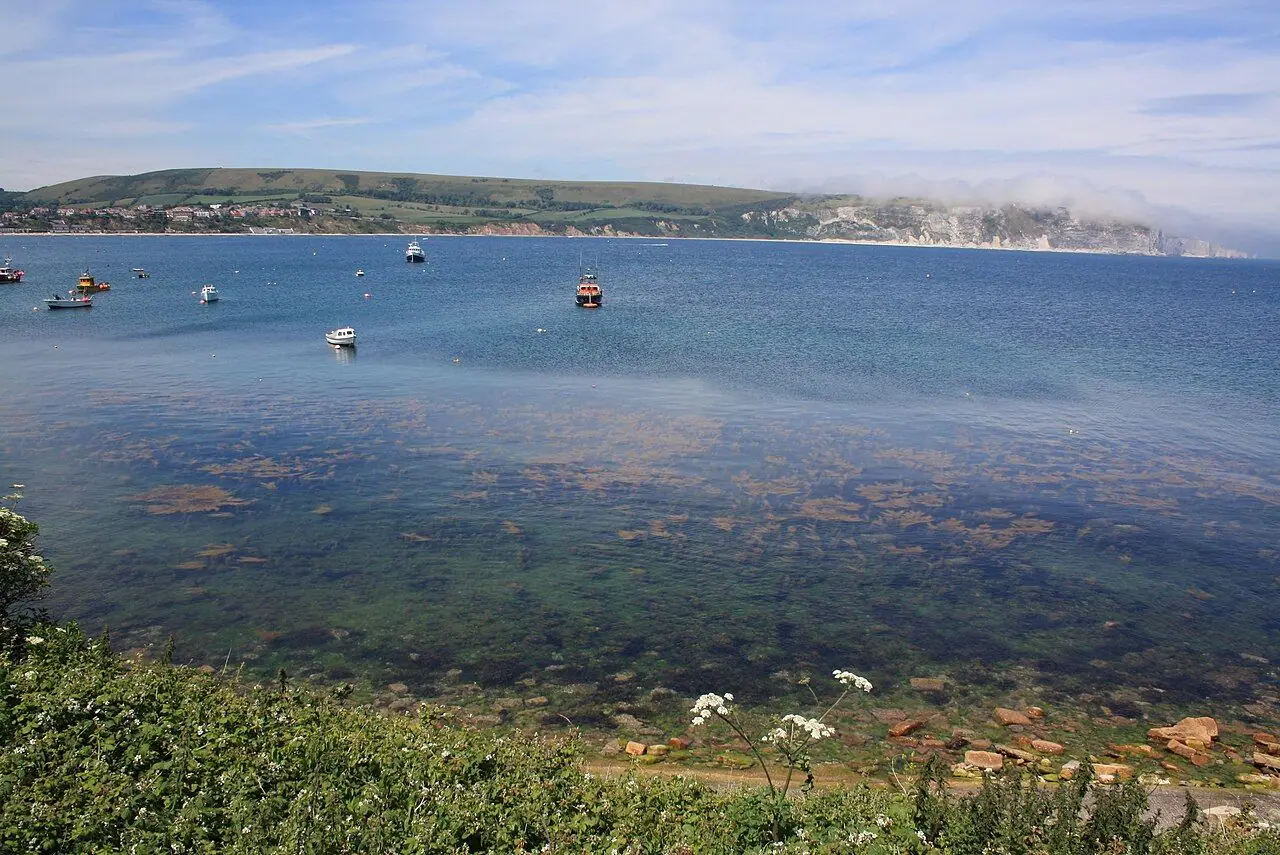
We have seen Old Harry from the water on our wild camping kayak trip in Dorset, and paddling past it was the highlight of the trip. However, we haven't walked this clifftop loop yet, so I've researched every detail for you. The circular walk gives you a completely different view. After Old Harry, you continue around the headland to Ballard Point. Then you climb onto the springy chalk grassland of Ballard Down, a long ridge where skylarks sing in spring and summer. From the top you can see Swanage Bay on one side. On the other side there is Studland Bay, Poole Harbour and Bournemouth, with the Isle of Wight on the horizon. On a clear day you can even spot the Needles. Fun fact: they are the same band of chalk as Old Harry. They were joined until sea levels rose after the last Ice Age and cut them apart.
It is short, varied and easy to do by bus. So it makes a perfect half-day walk, and you can finish with an afternoon on Studland's golden beaches. Below you will find the route, buses, parking and cliff-edge safety tips.
At a glance
- Distance: about 6–7 km for the classic loop (up to 8.5 km if you walk west along the ridge to the obelisk and back)
- Elevation gain: around 150–210 m
- Allow 2–3 hours
- Difficulty: Moderate. Mostly easy, with one short, steep climb or descent on Ballard Down and unfenced cliff edges
- Route type: Circular
- Start/finish: the National Trust Middle Beach / Manor Road car park area in Studland village (near the Bankes Arms), or South Beach car park
- Best season: April–October. Spring and early summer for wildflowers and skylarks
- Prices: free to walk. National Trust car parks charge non-members
- Toilets: public toilets in Studland near the start of the Old Harry track. There is also the Bankes Arms pub, seasonal cafés and a National Trust café at Knoll Beach
- Suitable for children: yes, great for kids. The Old Harry track works with an all-terrain pushchair, but the Ballard Down loop doesn't
- Dogs: welcome. Keep them on a lead near the cliffs and livestock
Route description
I describe this loop anticlockwise. First you go out to Old Harry along the flat coast path, then over Ballard Down. This way you get the famous view early, and you climb up a grassy headland rather than going down a steep rutted track.
Studland to Old Harry Rocks (about 1.7 km)
From the car park near the Bankes Arms, walk along Manor Road towards the public toilets. Follow the fingerpost for the South West Coast Path, signed for Old Harry. The wide, well-used track runs east through woodland and then across open grassland, with the sea sparkling through the trees on your left.
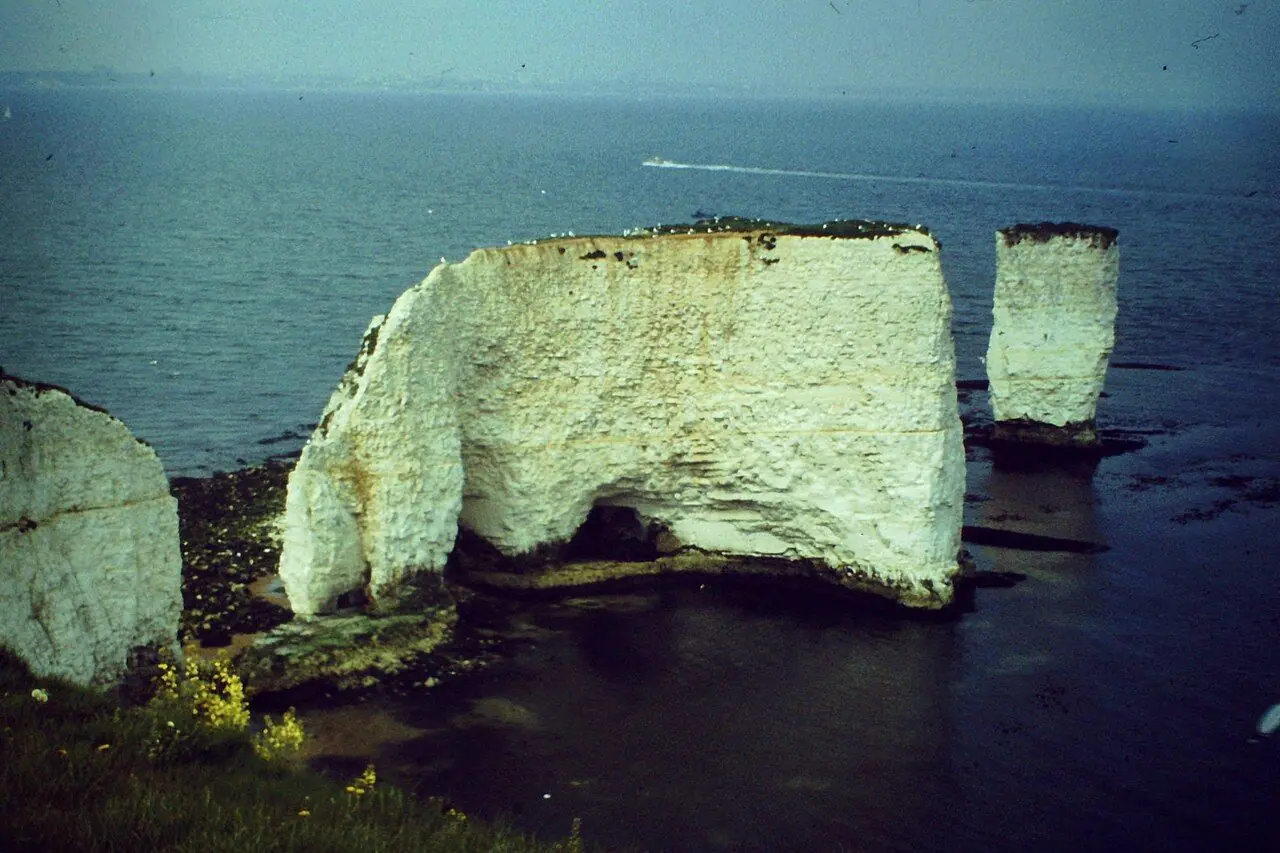
After about 20–30 minutes, you reach the end of the land at Handfast Point. Just offshore stand Old Harry and a smaller stack beside him. According to the local legend, the name comes from Harry Paye, a pirate who attacked merchant ships leaving Poole Harbour. The original stack called Old Harry's Wife fell into the sea in 1896 and left a stump. The stacks formed when waves found cracks in the chalk. These became caves, then arches, and when the arches collapsed, only the towers were left. This is still happening today. The gap between the headland and the stacks is called St Lucas' Leap, after a greyhound that is said to have fallen there.
Take your time here and enjoy the view. However, stay well back from the edge! The clifftops are unfenced and the chalk is crumbly and undercut in places.
Around the headland to Ballard Point (about 1.5 km)
Turn right (south) and follow the clifftop path around the headland. You can look down on the Pinnacles, a group of chalk stacks where seabirds nest. Keep to the main path as it climbs gently along the cliffs, and ignore the Purbeck Way path that branches inland. Soon you reach Ballard Point, with a trig point and a sudden, stunning view over Swanage Bay and the town of Swanage.
Along Ballard Down
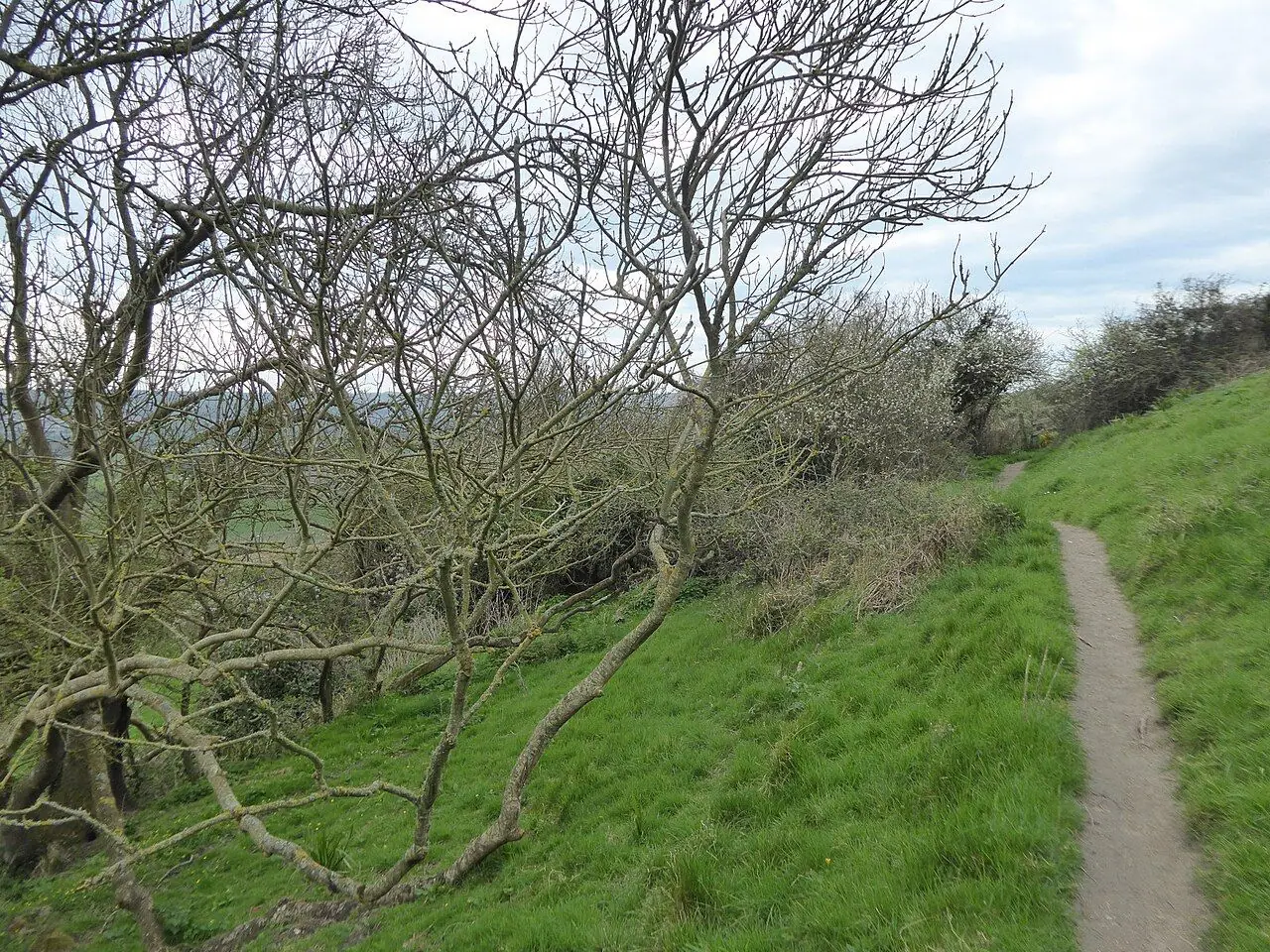
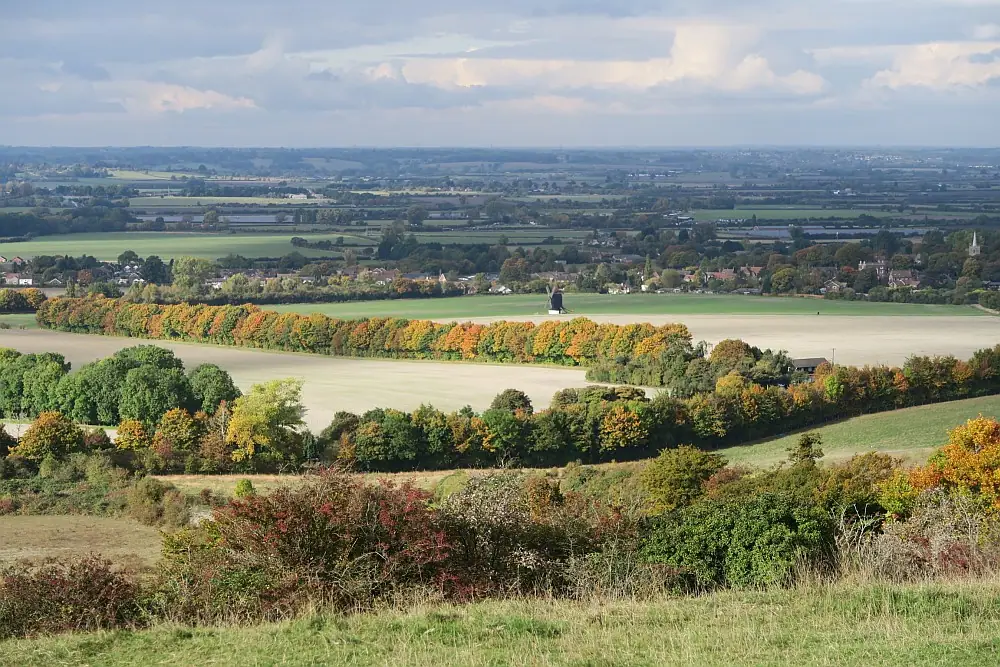
From Ballard Point, head west onto the wide grassy ridge of Ballard Down. It is around 160 m at its highest point. The National Trust owns it, and animals graze here to keep the rich chalk grassland open. The walking is easy on springy turf, with the sea on both sides and skylarks singing above you from spring to late summer. Boundary stones along the ridge mark the old line between the Studland and Swanage parishes.
Optional detour to the obelisk: keep heading west along the ridge for about 1.3 km to the obelisk near the western end of the down. It was originally a lamp standard in the City of London! It was moved here in 1892 to mark Swanage's first piped water supply. During the Second World War it was taken down, so it couldn't help enemy aircraft find their way, and it was put back up in 1973. Then walk back east along the ridge.
Descent to Studland
Look for the stone seat on Studland Hill, called the "Rest and be Thankful". It is a lovely spot for a final look over the bay. Here, turn left onto the bridleway and go down steeply towards Studland. The track can be stony, rutted and slippery after rain. At the bottom, pass the Glebeland Estate, follow the lane past Manor Farm and take Church Road towards St Nicholas Church. It is one of the finest small Norman churches in Dorset, so look up at the quirky carved corbels. A path from the church leads back to the car park.
How to get there
By public transport
The Purbeck Breezer 50 (morebus) is the classic car-free way to Studland. It runs between Bournemouth railway station and Swanage via Westbourne, Sandbanks, the Sandbanks chain ferry and Studland. The bus actually rides across on the ferry, which is really fun. In summer many journeys use open-top buses, and the views from the top deck are amazing. Prices: single fares have been capped at £3, and day tickets are available. Buses accept contactless and cash.
From the Swanage end, you can take the main-line train to Wareham. Then take the Purbeck Breezer 40 bus via Corfe Castle to Swanage, and the 50 to Studland. Another option is to walk the South West Coast Path from Swanage over Ballard Down to Old Harry.
Important: the Sandbanks Ferry is taken out of service for refits from time to time, usually in November, and sometimes for longer repairs. At the time of writing (November 2026), it was out of service for a scheduled refit, and the return date was still to be announced. When the ferry has been closed before, morebus split the Breezer 50, so Studland was only served from Swanage. Always check morebus service updates and the Sandbanks Ferry website before you travel.
By car and parking
You can reach Studland via the A351 through Corfe Castle and the B3351, or via the Sandbanks Ferry from Poole when it is running.
Parking: The National Trust runs several car parks in Studland: South Beach, Middle Beach, Knoll Beach and Shell Bay. In 2026, non-member rates were £4 for up to 2 hours, £8 for up to 4 hours and £10 for all day. National Trust members and Blue Badge holders park free. You can pay by coins, card (at Knoll Beach) or the JustPark app. The car parks fill quickly on sunny summer days, so arrive early to avoid disappointment. Check current charges and opening times on the National Trust's Studland Bay page.
Good to know
- No permits are needed. Old Harry, Ballard Down and much of Studland are owned and cared for by the National Trust.
- Toilets: in Studland near the start of the Old Harry track, and at National Trust facilities at Middle Beach, Knoll Beach (including a Changing Places toilet) and Shell Bay.
- Knoll Beach café: the National Trust café is open all year.
- Dogs: on Studland beaches, dogs must be on a short lead from 1 May to 30 September. On the heath and dunes they must be on leads from 1 March to 31 July, to protect ground-nesting birds. There are no restrictions on the coast path, but keep them on leads near cliffs and livestock.
When to go
The walk is lovely all year round. Spring and early summer bring wildflowers on Ballard Down and skylarks overhead. Summer is beautiful but busy, with packed car parks and crowded beaches on hot weekends. So arrive early or come by bus. Autumn and winter are quieter, with dramatic light on the chalk. However, the paths can be muddy, especially the descent from Ballard Down.
The headland is exposed, so it can be very windy on the clifftop and ridge. Avoid the cliff edges in strong winds or after long spells of heavy rain, when chalk falls are more likely.
Hiking with kids
This is a fantastic family walk. It is short and varied, and Old Harry gives you a real "wow" moment.
- Pushchairs: the flat, wide track from Studland to Old Harry (about 3.5 km return) is manageable with an all-terrain pushchair in dry weather. The full loop isn't suitable, as the bridleway on and off Ballard Down is steep, rutted and stony.
- Carriers: a back carrier works well for the full circuit.
- Suitable for children: most children from around 4–5 can manage the full loop, especially with a picnic stop on Ballard Down.
- Cliff safety: hold hands or keep a very close eye on young children near Old Harry and along the cliffs. The edges are unfenced, crumbly and sometimes undercut.
- Keep them engaged: tell them the tale of Harry the pirate and count the chalk stacks. Look for skylarks rising and singing, and spot the Isle of Wight and the Needles. Then finish with a sandcastle session on Studland's beaches.
What to pack
- Comfortable walking shoes or boots with grip, as the chalk is slippery when wet
- A windproof jacket, because the headland is exposed
- Sun hat and sunscreen in summer, as there is little shade
- Water and snacks
- OS Explorer OL15 (Purbeck & South Dorset) or a navigation app
- Swimwear and a towel for a dip at Studland after the walk
- Coins or the JustPark app for parking, or a contactless card for the bus
Safety tips
- Stay well back from the cliff edges. The chalk is soft and crumbly, often undercut and can collapse without warning. This coastline is still eroding. Never go near the edge for a photo, and don't climb over fences or onto the stacks.
- Keep dogs on a lead near the cliffs. The drops are sheer.
- Take care on the steep bridleway coming down from Ballard Down, especially when wet.
- Don't try to reach the stacks from the beach. The cliffs have rockfalls and the tide cuts off the base.
- In an emergency on the coast, call 999 and ask for the Coastguard.
Leave no trace & sustainable tips
- Arrive by bus. The Breezer 50 and the Sandbanks Ferry make Studland one of the best car-free walking destinations in Dorset.
- Stick to the paths across the chalk grassland and heath. They support rare plants, insects and ground-nesting birds.
- Keep dogs on leads in nesting season and around grazing animals.
- Take all litter home. There are few bins on the route.
- Leave the chalk alone. Don't carve initials or take fossils or flints from the cliffs.
- Support local businesses in Studland and Swanage. You can also join or donate to the National Trust, which cares for this coast.
Where to stay & eat nearby
- The Bankes Arms in Studland is right at the start of the walk. It is a traditional pub and also home to the Isle of Purbeck Brewery.
- Manor Farm Tea Rooms in Studland (seasonal) is a good spot for tea and cake.
- National Trust Knoll Beach Café is open all year.
- Swanage has a wide choice of B&Bs, guesthouses, hotels, self-catering and campsites, plus plenty of cafés, pubs and restaurants.
More to explore nearby
- Studland Bay beaches: miles of sand backed by dunes and heathland, with nature trails.
- Swanage Railway: a heritage steam railway from Swanage to Corfe Castle.
- Corfe Castle: dramatic National Trust castle ruins.
- Durlston Country Park, near Swanage, with cliff walks, a castle and wildlife.
- Brownsea Island in Poole Harbour, known for its red squirrels (boats from Poole Quay and Sandbanks).
- The South West Coast Path to Swanage: walk on over Ballard Down into Swanage and catch the bus back.
FAQ
How long is the walk to Old Harry Rocks? From Studland, it is about 1.7 km (just over a mile) each way on a flat track. This takes around 20–30 minutes. The full circular route via Ballard Down is about 6–7 km and takes 2–3 hours.
Can you walk to Old Harry Rocks with a pushchair? Yes, on the flat track from Studland, in dry weather with an all-terrain pushchair. The loop over Ballard Down isn't suitable for pushchairs.
Where do you park for Old Harry Rocks? Use one of the National Trust car parks in Studland. Middle Beach and South Beach are closest to the start. They are free for National Trust members and pay and display for others. They fill up fast in summer.
Can you get to Old Harry Rocks by bus? Yes. The Purbeck Breezer 50 runs between Bournemouth and Swanage via the Sandbanks Ferry and Studland. When the ferry is closed for refits, check morebus service updates for other arrangements.
Is it safe to walk near the cliffs? Yes, if you stay on the path and well back from the edge. The chalk cliffs are unfenced, undercut and can collapse suddenly, so keep children and dogs close.
Have you seen Old Harry Rocks, from the clifftop or from the water? Let me know in the comments!
Photo credits (4)
All photos on this page are by other photographers and are used under free licences. Thank you for sharing them.
- Cover photo: Old Harry Rocks - geograph.org.uk - 4683163.jpg by Marathon, CC BY-SA 2.0, via Wikimedia Commons. Resized and cropped for this page.
- Photo 2: Old Harry Rocks - geograph.org.uk - 2925983.jpg by Colin Smith, CC BY-SA 2.0, via Wikimedia Commons. Resized for this page.
- Photo 3: Path on Ballard Down - geograph.org.uk - 5346161.jpg by David Smith, CC BY-SA 2.0, via Wikimedia Commons. Resized for this page.
- Photo 4: Ballard Down - geograph.org.uk - 4567631.jpg by John Stephen, CC BY-SA 2.0, via Wikimedia Commons. Resized for this page.


join the conversation
Comments
No comments yet. Be the first to share your thoughts!