Travel guide
Via Ferrata for Beginners in Europe: Easy Routes, Gear and Safety
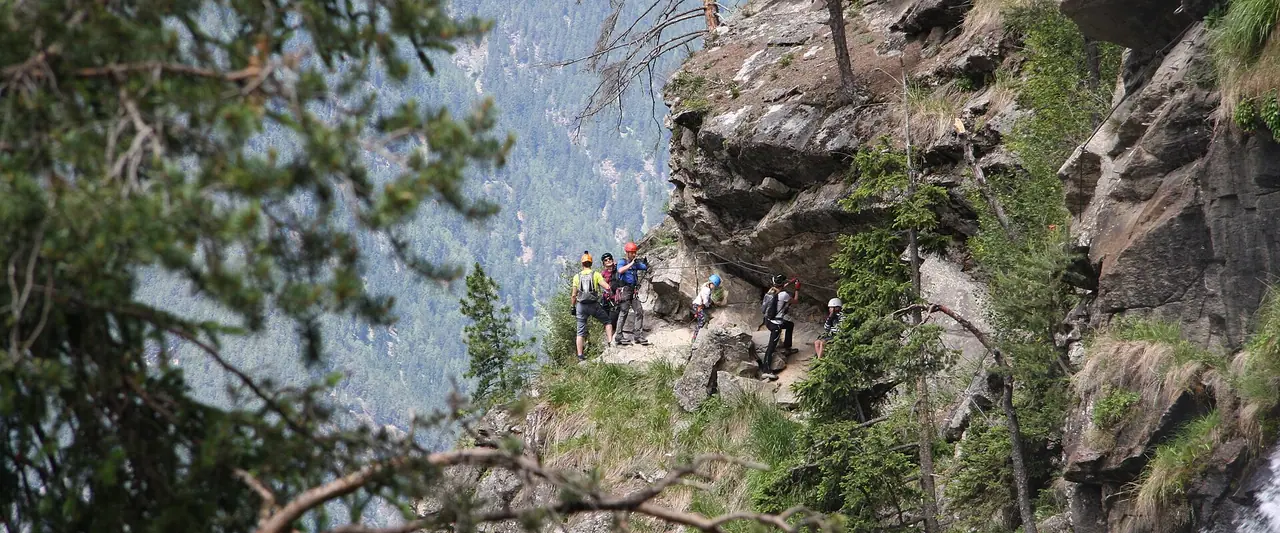
Fancy climbing a cliff without being a climber? Here is how via ferrata works, what the grades mean, the kit you need and the easiest first routes in the UK, Italy and Switzerland.
This post contains affiliate links. If you book or buy through them, I may earn a small commission at no extra cost to you. More about this
Have you ever looked at a steep rock face and wished you could climb it, without years of rock climbing lessons? That is exactly what a via ferrata lets you do. You follow a steel cable fixed to the rock, and you climb on iron rungs, ladders and little bridges. You are clipped in the whole time, so it feels adventurous but it is safe with the right kit.
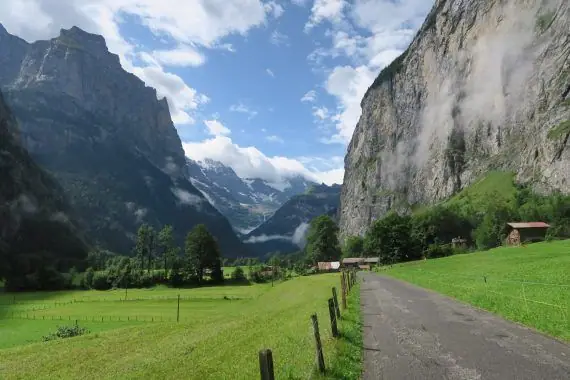
I first got curious about via ferratas on our Lauterbrunnen valley hike, where I learned that a via ferrata comes down the cliffs from Mürren. Then on our Vršič Pass road trip in Slovenia we stopped at the Prisank Window viewpoint. Two via ferratas lead through that huge hole in the rock, but they are for skilled mountaineers! We haven't done a proper via ferrata ourselves yet. It is high on our bucket list, so I've researched the grades, the gear and the easiest first routes for you.
Quick answer
- What it is: a climbing route protected by a steel cable, with rungs and ladders. You stay clipped in the whole way.
- Grades for beginners: on the Austrian A–E scale, A is easy and recommended for beginners and children. B is the most common grade. Switzerland uses K1–K6.
- Kit: a helmet, a harness and a via ferrata set with an energy absorber and two carabiners. Sets are made for users of about 40–120 kg.
- Easy first routes: Honister in the Lake District (guided, from £55), Via Ferrata Colodri in Arco and Rio Sallagoni near Drena at Lake Garda. Mürren to Gimmelwald in Switzerland is a step up (K3).
- Safety: keep both carabiners on the cable, one person per section of cable, and never go out when thunderstorms are forecast.
What is a via ferrata?
Via ferrata is Italian for "iron way". In German it is called a Klettersteig. It is a route on a cliff or mountain that is fitted with a continuous steel cable. Steeper parts have iron rungs, ladders or pegs, and some routes add suspension bridges and wire bridges.
You wear a harness with a special lanyard, called a via ferrata set. It has two arms, each with a carabiner, and an energy absorber in the middle. You clip both carabiners onto the cable. At each anchor point you move them over one at a time, so you are always attached. That is the clever part. You climb without a rope partner, but you are protected the whole way.
It sits somewhere between hiking and rock climbing. Easy routes feel like an exciting walk with a few ladders. Hard routes are steep and overhanging.
Via ferrata grades explained
There is no single worldwide scale, which can be a bit confusing. These are the two you will see most in the Alps.
The Schall scale (A–E)
This scale was created by Austrian guidebook author Kurt Schall and is widely used in the Eastern Alps. The Austrian Alpine Club explains it like this:
| Grade | What it means | Good for |
|---|---|---|
| A | Easy. A step up from a difficult hiking path, with large holds, pegs or ladders on steeper bits. Little arm strength needed. | Beginners and children |
| B | Moderately difficult. Steeper and more exposed, with rungs on vertical sections. You need more arm strength. | Your second or third route |
| C | Difficult. Steep to very steep, with smaller holds. Physically demanding. | Experienced, fit climbers |
| D | Very difficult. Vertical and sometimes overhanging. | Not for beginners or children |
| E | Extremely difficult, even beyond D. | Experts only |
The Austrian Alpine Club suggests you build up slowly, from A to B and then C. I really like that advice. B routes need much more arm strength than a hiking path, so don't rush it!
The Swiss K scale (K1–K6)
In Switzerland you will see grades from K1 (very easy) to K6 (extremely difficult). Roughly, K1 is close to A, K2 to B and K3 to C. However, the two scales don't measure exactly the same things, so treat this as a rough guide only.
Also, tourist boards sometimes use their own labels. Garda Trentino calls the Colodri route "Intermediate", but describes it as easy and a good first introduction. So always read the route description, not just the label.
What gear do you need?
- Helmet: a climbing helmet is a must, because of falling rocks.
- Harness: a normal climbing harness.
- Via ferrata set: two arms, two self-locking carabiners and an energy-absorbing system. Never use a home-made sling instead, as it won't absorb a fall.
- Gloves: via ferrata gloves save your hands from the steel cable.
- Shoes: hiking boots or approach shoes with a grippy sole.
- Daypack: water, snacks, a waterproof and a warm layer.
Weight limits: via ferrata sets are tested to the European standard EN 958. It covers users from 40 kg (body weight without kit) up to 120 kg (including kit). Outside that range the set might not absorb a fall properly. That is why manufacturers say lighter children need an extra rope from above, held by an experienced adult.
Can you rent it? Yes, in most via ferrata areas. For example, Intersport Mürren rents the full kit for the Mürren route. At Honister in the Lake District, the helmet, harness and lanyard are included, and you must use theirs.
Easy via ferrata routes for beginners
Honister, Lake District (UK)
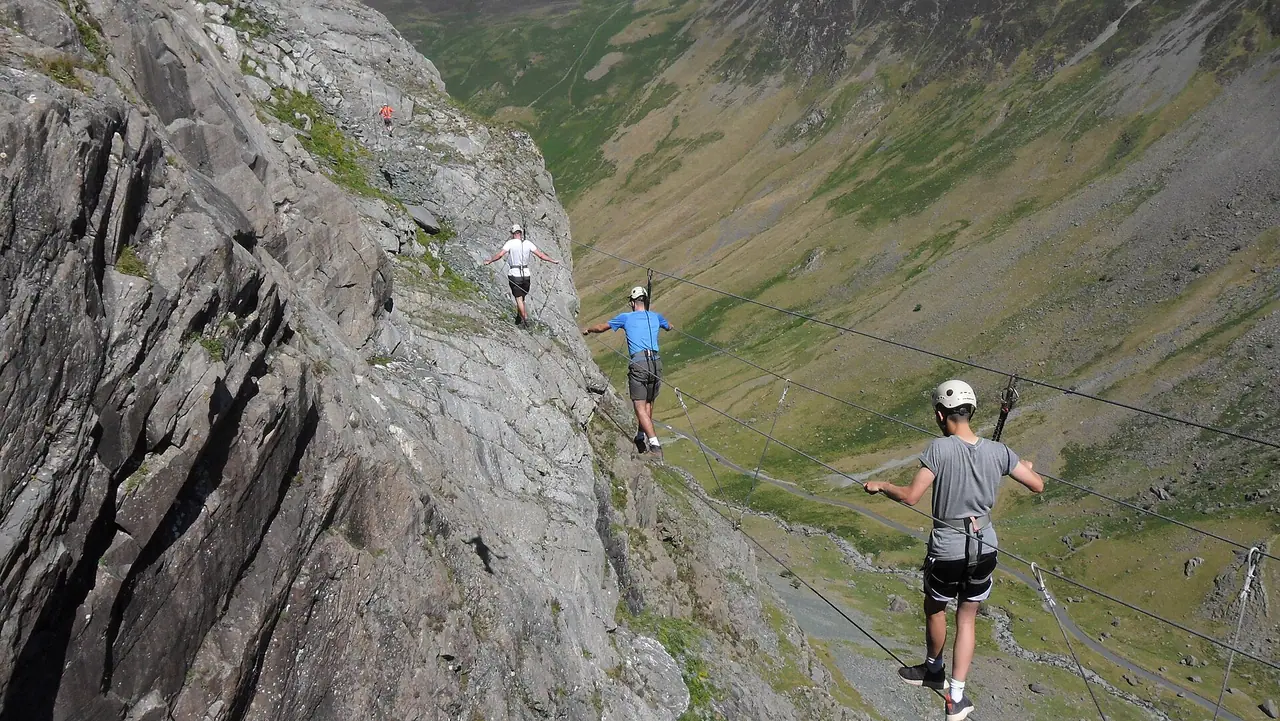
This is the easiest way to try a via ferrata without leaving the UK. The Via Ferrata Classic at Honister Slate Mine follows the historic path that quarrymen used to reach Honister Crag, up onto Fleetwith Pike. You climb on iron rungs, ladders, cables and bridges, and you stay clipped in all the way.
- Prices: from £55 per person (2026).
- Allow about 3 hours on average. Honister says it can take 1.5–3 hours, depending on group size, pace and weather.
- Who can go: 10 years and older, with under-16s accompanied by a participating adult. The minimum height is 1.3 m and the weight limit is 18 stone.
- Guided only: you go in a supervised group with a Honister guide. Going on the route without a guide is not allowed.
- What to wear: strong boots or shoes, waterproofs and gloves. It runs rain or shine, so dress for the mountain, not the car park!
- Phones and cameras: not allowed on the route. A GoPro is only allowed on a helmet or chest mount, checked by your guide.
Honister also has a harder Via Ferrata Xtreme. Honister Pass is in Borrowdale, near Keswick. If you are making a weekend of it, our Catbells and Derwentwater circular is a lovely walk nearby.
Via Ferrata Colodri, Arco (Lake Garda, Italy)
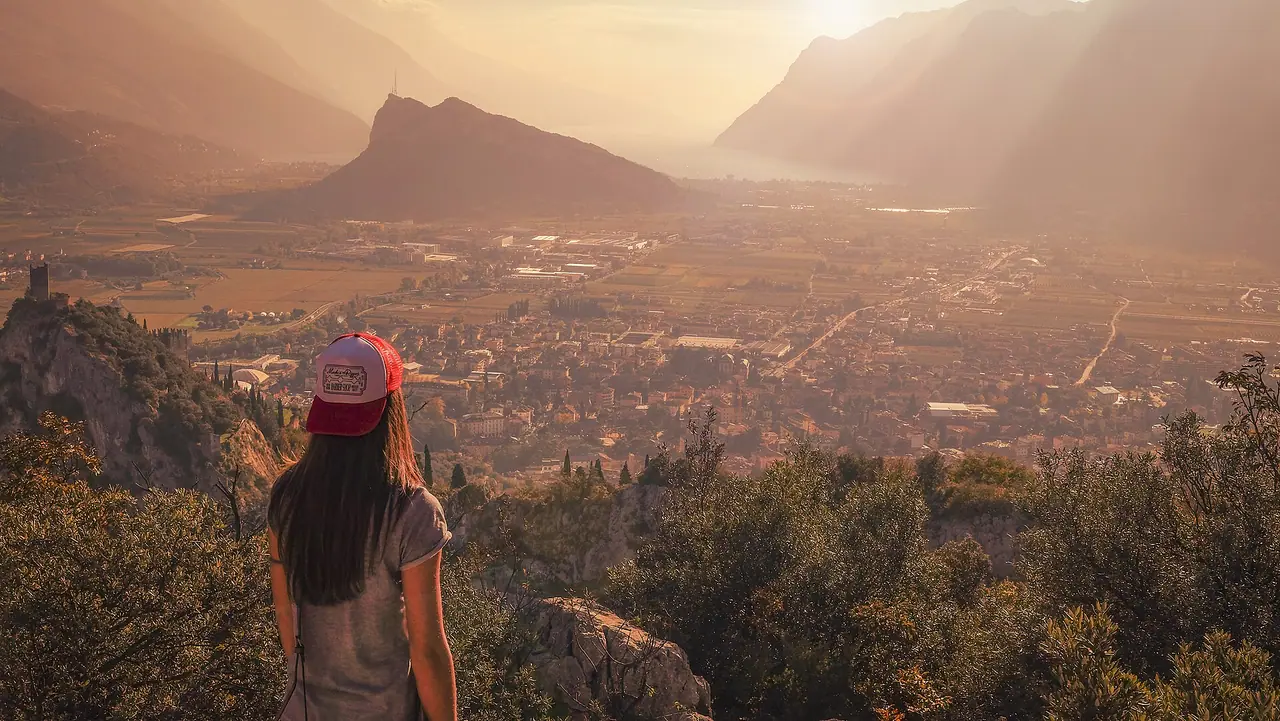
Arco, at the northern end of Lake Garda, is one of the best places in Europe to start. Garda Trentino calls Colodri one of its most popular routes for beginners and families. It climbs the east wall of Monte Colodri, right above the town.
- Start: Prabi in Arco. A path leads from the car park by the municipal swimming pool to the start in a few minutes.
- Allow about 2 hours, with around 280 m of ascent. The top is at 400 m.
- The route: an easy equipped ledge, then short walls, a corner with a short ladder and a smooth slab with rungs and cable. You finish at the summit cross.
- Way down: follow the Sentiero dei Lecci footpath to Laghel and back into Arco.
It is very popular, so I would go early on a weekday.
Rio Sallagoni, Drena (Lake Garda, Italy)
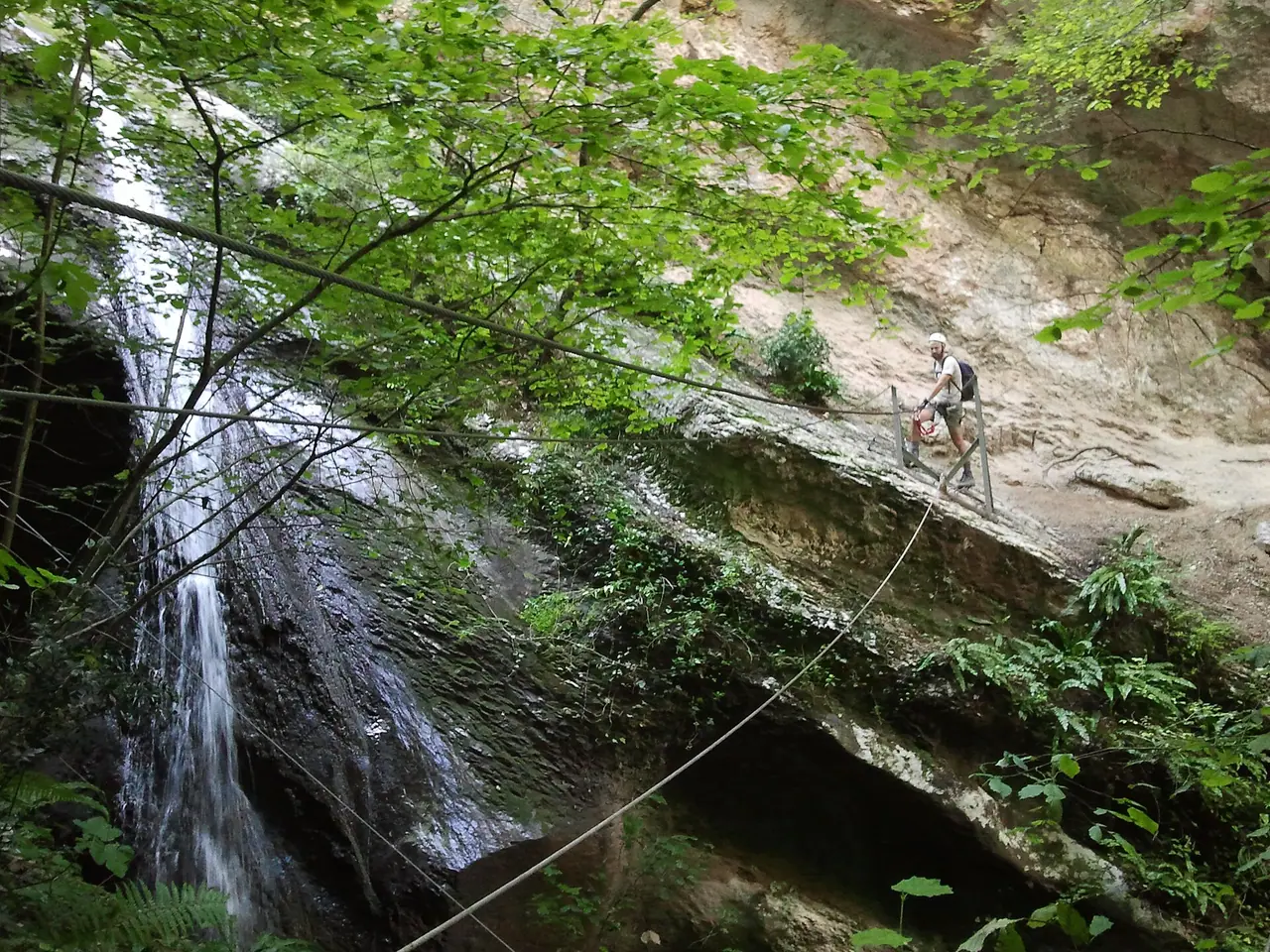
This one looks like so much fun. It follows the Rio Sallagoni stream up a narrow gorge, past waterfalls, to the foot of Drena Castle. There are two Tibetan bridges, ladders and rungs, a passage between big boulders and one short athletic section.
- Distance: 2.7 km, with about 205 m of ascent.
- Allow about 2 hours 30 minutes.
- Parking: the start is at the Tamburello parking area on the SP 84 road. There is more parking near Drena Castle.
- Good to know: the second section was re-equipped at the end of 2024, so you can now climb the whole gorge.
- Way down: follow the trail along the stream and the castle road back to the car park. Please don't cut through the fields, as they are private property.
Garda Trentino labels it "Intermediate", so I would do Colodri first. If you liked it, Rio Sallagoni is a great next step. Afterwards you can visit the castle and its 25 m tower.
Mürren to Gimmelwald, Switzerland (a step up)
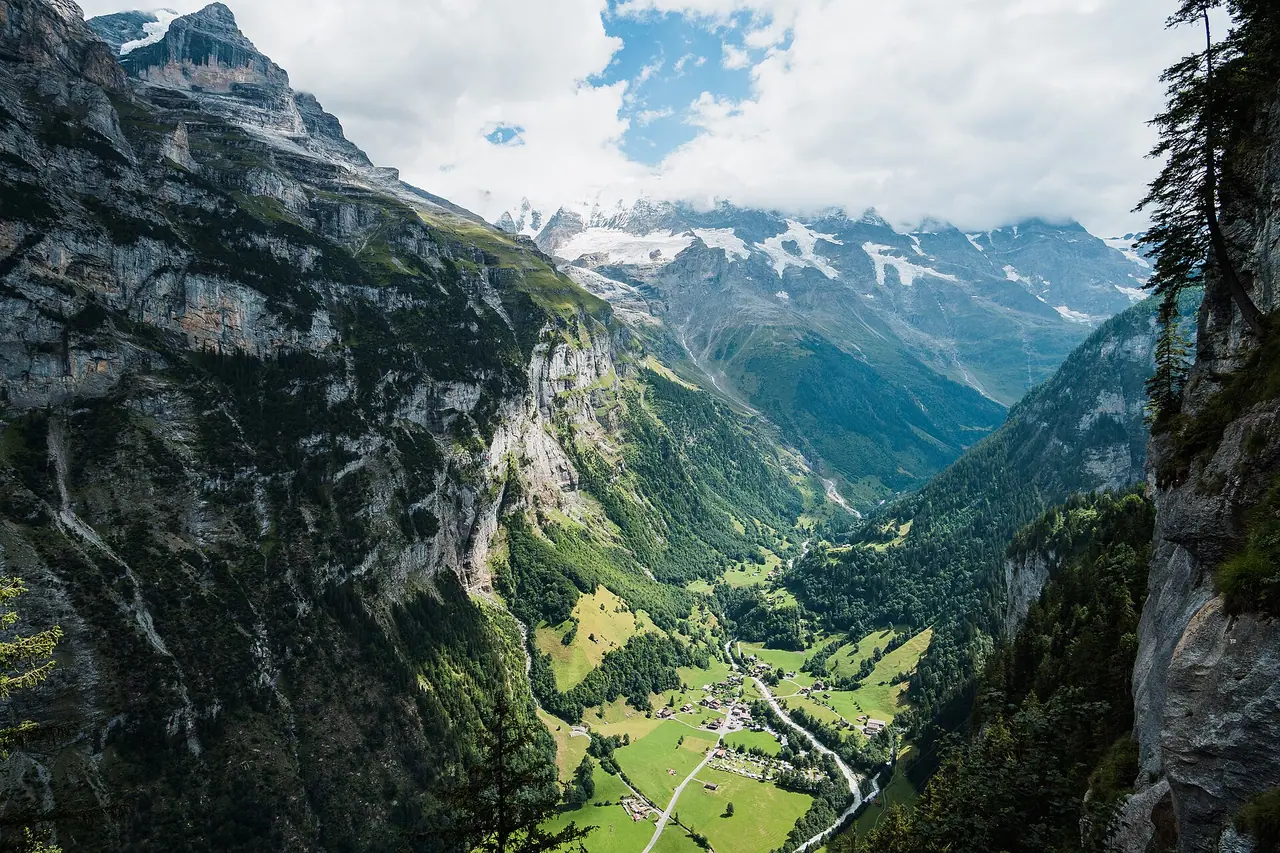
This is the famous one in the Bernese Oberland. It is graded K3, which the route's own website calls "fairly difficult", so it is not a first route for most people. However, it is a brilliant goal once you have a couple of easier ones behind you.
- Distance: 2.2 km, descending about 300 m from Mürren towards Gimmelwald. It only goes one way.
- Allow about 3 hours.
- Highlights: an 80 m Nepal bridge and huge views over the Lauterbrunnen valley. There is also a 60 m zipline, but you can only use it with a mountain guide.
- Season: 1 June to 31 October, 9 am to 6 pm.
- Start: by the Sportchalet in Mürren. You reach Mürren by cable car from Stechelberg or by mountain railway from Lauterbrunnen.
You need good fitness, sure feet and a head for heights. Interlaken tourism advises inexperienced climbers to go with a mountain guide, for example with Outdoor Switzerland.
A taster without the kit
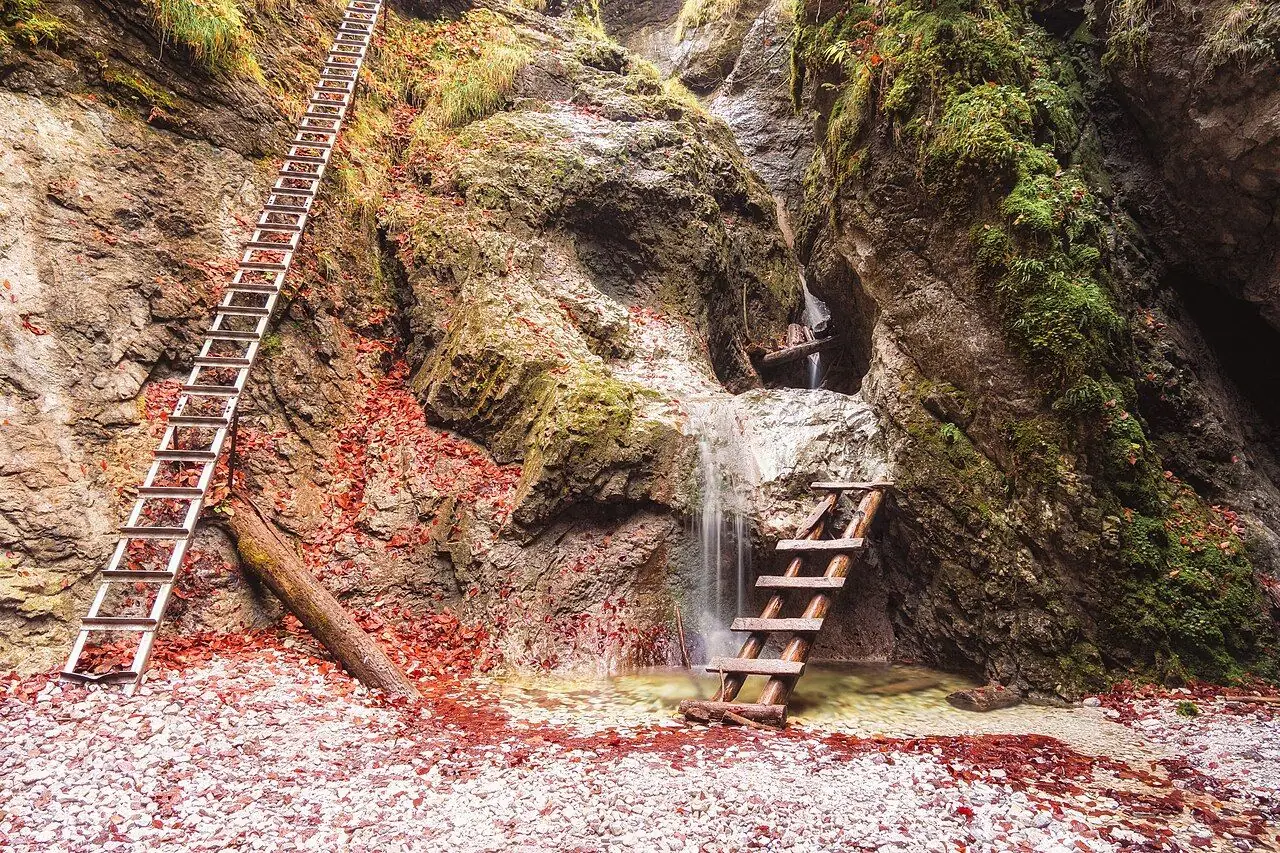
Not sure about heights? In the Suchá Belá gorge in Slovak Paradise you hike up waterfalls on ladders, footplates and chains. It is a fun way to test your head for heights.
Should you hire a guide?
For your very first via ferrata, I recommend it. A guide checks your harness, shows you how to clip in and picks a route that suits you. Guides usually provide the gear too.
After that, you can try easy routes on your own, but always with at least one friend.
Via ferrata safety tips
- Check the weather. Never start when thunderstorms are forecast. You are attached to a steel cable!
- Helmet on near the wall. Stones can fall from above, especially when others are climbing, or in wind and rain.
- Both carabiners on the cable. At each anchor, move one carabiner at a time, so at least one is always clipped in.
- One person per section. Only one person should be on the cable between two anchor points.
- Don't go alone. If you have an accident, nobody would be there to call for help.
- Know the emergency number. It is 112 across Europe. In Austria, mountain rescue is also on 140.
- Check your insurance. Make sure your travel insurance covers via ferrata and mountain rescue before you go.
On longer Alpine routes where there may be no phone signal, a satellite messenger gives extra peace of mind. The Garmin inReach Mini is one I recommend in my guide to the best personal locator beacons and emergency GPS devices.
Via ferrata with kids
Suitable for children: yes, on easy routes and with the right kit. The Austrian Alpine Club recommends grade A for children. Many children are under 40 kg, which is below the range most via ferrata sets are made for. So a lighter child needs to be roped up from above by an experienced adult, as the manufacturers advise.
At Honister the minimum age is 10. Peter is still too small, but I can't wait to try an easy route with him one day.
FAQ
Do I need climbing experience for a via ferrata?
No. For an easy A or K1–K2 route you need to be a confident hiker with a head for heights. However, a guide for your first route is a great idea.
Is via ferrata dangerous?
It is safe if you use a proper via ferrata set and follow the rules. The main risks are bad weather, falling rocks and picking a route that is too hard. Start easy, check the forecast and wear a helmet.
Where can I do a via ferrata in the UK?
Honister Slate Mine in the Lake District runs guided via ferrata trips. The Classic route costs from £55 per person (2026) and is open to anyone from 10 years old who meets the height and weight limits.
What grade should a beginner choose?
Start with grade A on the Austrian scale or K1–K2 in Switzerland. Move up to B once you know how your arms cope. The Mürren route (K3) is a good later goal.
Have you tried a via ferrata? Which one would you recommend for a first timer? Let me know in the comments!
Photo credits (5)
All photos on this page are by other photographers and are used under free licences. Thank you for sharing them.
- Cover photo: Klettersteig am Stuibenfall.jpg by GerritR, CC BY-SA 4.0, via Wikimedia Commons. Resized and cropped for this page.
- Photo 2: The Burma Bridge, Honister Via Ferrata - geograph.org.uk - 5913213.jpg by Anthony Foster, CC BY-SA 2.0, via Wikimedia Commons. Resized for this page.
- Photo 3: Ferrata torrente Sallagoni 04.jpg by Llorenzi, CC BY-SA 4.0, via Wikimedia Commons. Resized for this page.
- Photo 4: Monte Colodri, Italy (Unsplash).jpg by Cristina Gottardi cristina_gottardi, CC0, via Wikimedia Commons. Resized for this page.
- Photo 5: Lauterbrunnen view from Mürren.jpg by Deralpinbergsteiger, CC BY-SA 4.0, via Wikimedia Commons. Resized for this page.


join the conversation
Comments
No comments yet. Be the first to share your thoughts!